Shin pain can turn a good running block into a very annoying guessing game.
One week you feel fine. The next, every run starts with that familiar ache along the front or inside of the lower leg. You wonder whether you should push through, back off, change shoes, stretch more, run less or start Googling “shin pain support” at 10:43pm like a completely normal person.
The frustrating part is that shin pain can show up for different reasons. Sometimes it is linked to training load. Sometimes it appears after a sudden increase in distance, speed work, hills or running frequency. Sometimes it is connected to how your body absorbs and transfers force through the foot, ankle, calf, knee and hip.
That is why support can be useful, but it needs to be understood properly.
Compression socks, shin pain support products and running socks for shin splints will not magically fix the cause of shin pain. They are not a replacement for good training, recovery, strength work or professional advice. But the right support may help runners feel more comfortable, more stable and more aware of the lower leg while they move.
At Floky, we look at support through the lens of biomechanics. That means thinking about how the body moves as a connected system, not just how much pressure can be applied to one area.
For runners dealing with shin discomfort, that difference matters.
Why Shin Pain Happens When Running
Running places repetitive load through the lower body. Every stride sends force through the foot, ankle, shin, calf, knee and hip. When the body is prepared for that load, running can feel smooth and efficient. When the load is more than the body is ready to handle, discomfort can start to appear.
Shin pain is often linked to repetitive lower-leg stress, but the exact cause can vary from person to person.
Some common contributing factors include:
-
Increasing running distance too quickly
-
Running more often than usual
-
Adding hills, intervals or speed work too suddenly
-
Running on hard surfaces
-
Poor recovery between sessions
-
Fatigue
-
Footwear changes
-
Returning to running after time off
-
Weakness or reduced control through the calves, feet, hips or glutes
-
Sudden changes in terrain or training intensity
For many runners, shin pain is not caused by one single thing. It is usually the result of several factors building up at once.
That is why the best approach is rarely just “buy new socks and hope.” Support can help, but it should work alongside smarter training decisions and a better understanding of how your body is moving.
Shin Pain, Shin Splints and Lower-Leg Stress
Many runners use the term “shin splints” to describe pain along the front or inside of the shin. It is one of the most common running-related complaints, especially when people increase their training too quickly.
However, shin pain is not always the same thing for every runner. The location, severity and cause can vary. Some runners feel a dull ache that warms up as they move. Others feel sharper discomfort that gets worse during a run.
Because there can be different causes, it is important not to self-diagnose too casually.
If your shin pain is sharp, localised, worsening, present while walking or continuing after you stop running, it is worth speaking with a physiotherapist, doctor or qualified health professional.
Support products may help with comfort and awareness, but they should not be used to ignore pain that needs proper assessment.
What Is Shin Pain Support?
When runners search for shin pain support, they are usually looking for something that helps the lower leg feel more comfortable and secure during movement.
This might include:
-
Compression around the calf and shin
-
A more supported lower-leg feeling
-
Warmth during running
-
Reduced discomfort from lower-leg movement
-
Better awareness of the shin and calf area
-
Confidence when returning to running
-
Support during longer or harder sessions
Shin pain support is not about locking the leg in place. It is about helping the runner feel more comfortable, more aware and more confident while moving.
This is where compression socks can be useful for some runners.
Can Compression Socks Help With Shin Pain?
Compression socks may help some runners feel more supported through the lower leg. By creating a firm, secure feel around the calf and shin area, they may make running feel more controlled and comfortable.
This does not mean compression socks cure shin splints or prevent shin pain. That would be too big a claim.
But they may help by providing:
-
Lower-leg compression
-
A supported feeling around the calf and shin
-
Warmth
-
Proprioceptive feedback
-
Comfort during running
-
Confidence when easing back into training
-
A more secure feeling during longer sessions
Proprioception is your body’s awareness of where it is in space. When compression is applied to the lower leg, it gives the body sensory feedback. For runners, this may help create a greater sense of control and awareness with each stride.
This can be especially valuable when shin discomfort makes movement feel uncertain.
If you are searching for shin pain compression socks, the goal should not be to find a miracle fix. The goal should be to find support that helps you move more comfortably while you also address training load, recovery and strength.
Why Biomechanics Matters for Shin Pain
The shin is not working on its own.
Every time you run, your lower leg is influenced by the way the rest of your body moves. The foot contacts the ground. The ankle absorbs and transfers force. The calf helps manage impact and propulsion. The knee and hip control position. The glutes and core help stabilise the body.
If one part of the chain is overloaded, fatigued or not controlling movement well, the lower leg can take more stress.
That is why biomechanics matters.
Biomechanics is the study of how the body moves. For runners, it helps explain how force travels through the body and how different joints and muscles work together.
Shin discomfort is often felt in one area, but the contributing factors may come from several areas, including:
-
Foot strike
-
Ankle control
-
Calf strength and endurance
-
Knee position
-
Hip stability
-
Glute strength
-
Stride length
-
Cadence
-
Terrain
-
Training load
This is where Floky’s approach is different from generic compression.
Biomechanical support is not just about making something tight. It is about supporting the body during movement. The aim is to provide compression, comfort and control in a way that works with the athlete, not against them.
For runners dealing with shin discomfort, support should feel stable, comfortable and natural.
What to Look for in Running Socks for Shin Splints
If you are looking for running socks for shin splints or general shin pain support, the right product should be designed for movement.
A good running compression sock should feel supportive without being restrictive. It should stay in place, feel comfortable over distance and provide a secure lower-leg feel.
Here are a few things to look for.
Comfortable Compression
Compression should feel firm and supportive, not painfully tight. If the sock causes numbness, tingling or discomfort, it is not the right fit.
For running, compression needs to be balanced. Too little may not feel useful. Too much can feel restrictive.
Support Through the Calf and Shin Area
For shin discomfort, lower-leg coverage matters. A compression sock that supports the calf and shin area may help create a more secure feeling during repeated impact.
This is particularly relevant for runners who feel discomfort through the front or inside of the lower leg.
Secure Fit
A sock that slips, bunches or moves around during a run quickly becomes annoying. Worse, it can distract you from your stride.
Look for a secure fit that stays comfortable while you move.
Breathable Material
Running creates heat and sweat, so breathability matters. A good running sock should feel comfortable against the skin and suitable for repeated use.
Durable Construction
If you are running regularly, your socks need to handle repeated sessions. Durability matters, especially if you are using compression socks as part of your training routine.
Movement-Friendly Design
Support should never feel like it is fighting your stride. The best support products move with the body while helping create a greater sense of control.
Biomechanical Support
This is the key difference.
Generic compression focuses mostly on pressure. Biomechanical support considers how the body moves, absorbs force and maintains control.
For runners, that is important because running is repetitive. Small changes in comfort, control and awareness can matter over time.
Floky Options for Lower-Leg Support
Floky’s approach is built around biomechanical support for active movement. The aim is to help athletes feel more supported, more stable and more confident while they train, compete and recover.
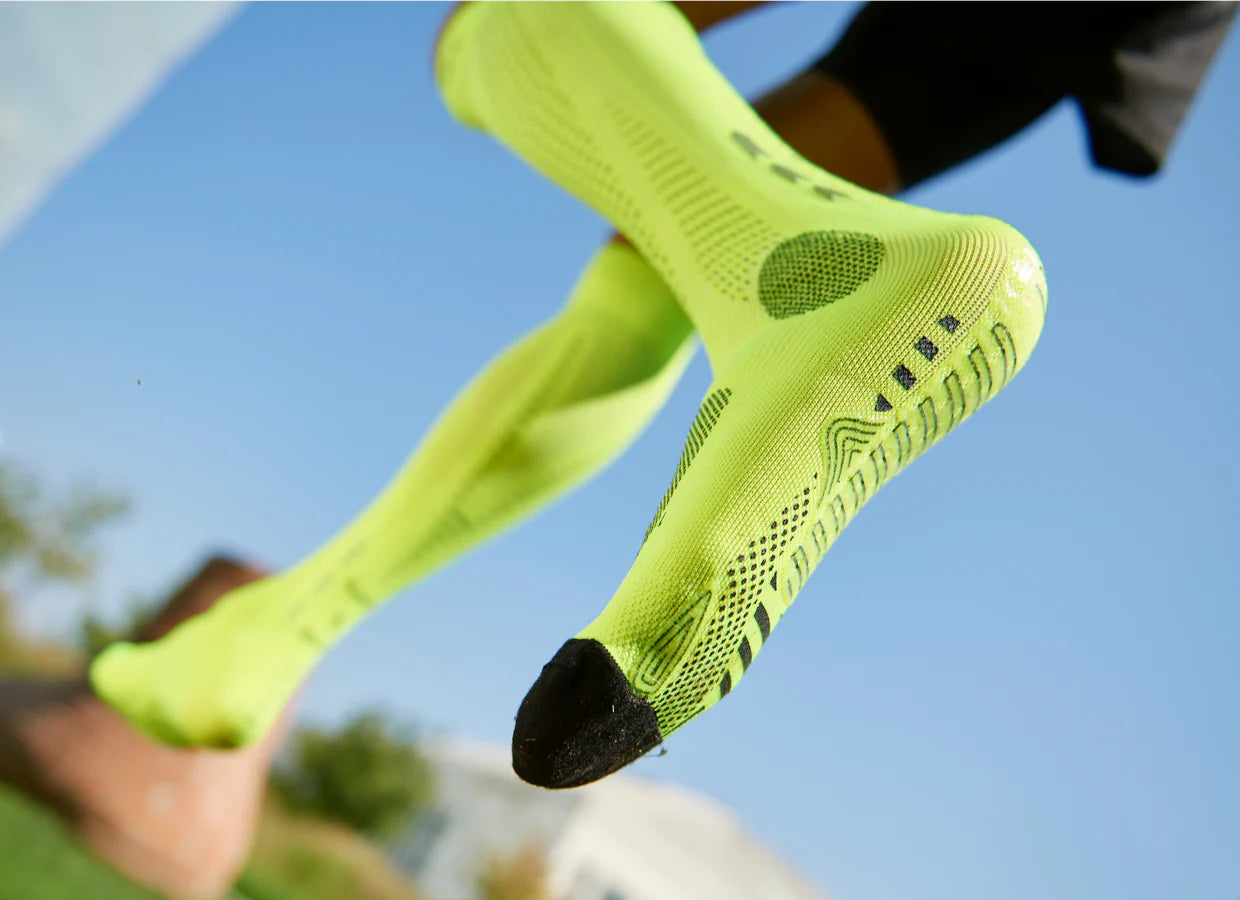
For runners dealing with lower-leg discomfort, Floky compression socks are the most relevant starting point. They are designed to provide a supportive lower-leg feel, making them suitable for runners who want comfort, control and confidence through the calf and shin area.
They may be useful for:
-
Road running
-
Trail running
-
Gym training
-
Return-to-running phases
-
Longer training sessions
-
Recovery-focused use
-
Athletes wanting lower-leg compression and support
For runners who want broader lower-body support, the HYPER Man Leggings and HYPER Woman Leggings may also be a strong option. These provide full lower-body compression and are designed for stability and recovery, with support through areas including the knees, glutes and surrounding muscle groups.
A simple way to think about it:
-
Choose Floky Compression Socks if your main focus is lower-leg or shin support.
-
Choose HYPER Man Leggings if you want full-leg compression, stability and recovery support for men.
-
Choose HYPER Woman Leggings if you want full-leg compression, stability and recovery support for women.
-
Consider combining support options depending on your sport, training load and comfort needs.
The goal is not just to add compression. The goal is to support the way your body moves.
Training Load Still Matters
Support gear can be useful, but it cannot replace smart training.
If shin discomfort is being driven by doing too much too soon, no sock or sleeve will fully solve the issue. That does not mean support is useless. It means support should be used as part of a bigger approach.
If you are dealing with shin pain when running, consider:
-
Building distance gradually
-
Avoiding sudden jumps in weekly running volume
-
Being careful when adding hills or speed work
-
Allowing enough recovery between harder sessions
-
Strengthening your calves, feet, hips and glutes
-
Checking whether your shoes are still suitable
-
Varying surfaces where possible
-
Reducing load if pain worsens
-
Getting advice if symptoms keep returning
For many runners, shin pain appears when training demand increases faster than the body can adapt.
Support can help you feel more comfortable, but your body still needs time to build capacity.
Common Mistakes Runners Make With Shin Pain
Shin pain can be frustrating, and frustrated runners tend to make bold decisions. Not always wise ones.
Here are a few common mistakes.
Pushing Through Worsening Pain
A mild ache that settles quickly is different from pain that gets worse as you run. If shin pain increases during a session, changes your stride or continues after running, it is worth taking seriously.
Changing Everything at Once
New shoes, new training plan, new surface, more hills and more speed work all at the same time? That is a lot for the body to process.
When trying to manage shin discomfort, change one or two things at a time so you can actually understand what helps.
Only Stretching the Calves
Calf tightness can play a role for some runners, but shin pain is not always just a stretching issue. Strength, load management, foot control, hip stability and recovery can all matter.
Expecting Compression Socks to Fix the Problem Alone
Compression socks may help with support and comfort, but they should not be treated as a complete solution.
Use them alongside smarter training, not instead of it.
Ignoring Strength Work
Running is repetitive impact. Strength work helps the body tolerate that impact. Calf raises, foot strength, hip stability and glute work can all be useful parts of a runner’s routine.
If in doubt, a physio or running professional can help guide this based on your body and symptoms.
When to Get Professional Advice
Shin pain can sometimes be a warning sign that the body is not coping with the current training load. In some cases, it may need proper assessment.
Speak with a doctor, physiotherapist or qualified healthcare professional if:
-
Shin pain is sharp or localised
-
Pain gets worse during a run
-
Pain continues after stopping
-
Pain is present when walking
-
There is swelling
-
There is tenderness in one specific spot
-
Pain returns every time you run
-
You are limping or changing your stride
-
Rest and support do not improve symptoms
It is always better to get guidance early than to wait until a small issue becomes a bigger one.
Final Thoughts
Shin pain when running is common, but it should not be ignored.
It is often linked to repetitive lower-leg stress, training load and how the body absorbs force during movement. That is why support can be helpful, but it needs to be part of a smarter overall approach.
Compression socks may help runners feel more supported through the calf and shin area. They may provide warmth, comfort and proprioceptive feedback, helping create a greater sense of control during movement.
But biomechanics is what connects the bigger picture.
The shin is part of a larger running chain that includes the foot, ankle, calf, knee, hip, glutes and core. When support is designed with that movement system in mind, it becomes more than just compression.
That is the Floky difference.
If you are looking for shin pain support, explore Floky compression support designed to help runners move with more comfort, control and confidence.