Pickleball has become one of the fastest-growing sports for good reason. It is social, fun, easy to pick up and does not feel as intimidating as tennis, squash or other high-speed racquet sports.
But do not let the smaller court fool you.
Pickleball still asks a lot from the body. Every game involves quick starts, sudden stops, side steps, lunges, short sprints, repeated paddle swings and plenty of hard-court impact. That combination can place stress through the elbows, wrists, knees, ankles, calves, Achilles, hips and lower back.
That is why pickleball injuries are becoming more common as more people take up the sport, play more often and push their bodies through movements they may not have trained for in years.
The good news is that many pickleball players can reduce their risk by preparing properly, building up gradually, using the right footwear, improving strength and choosing support gear that helps them feel more stable and confident on court.
At Floky, we approach support through the lens of biomechanics. That means looking at how the body moves as a connected system, rather than treating each joint in isolation. For pickleball players, this matters because the sport is built on constant changes of direction, repeated swings and fast reactions.
Compression and support gear will not prevent every injury, and it should not be used to ignore pain that needs professional advice. But the right biomechanical support may help players feel more comfortable, stable and confident while they move.
Why Pickleball Injuries Happen
Pickleball may look lower-impact than many sports, but the movement demands are still significant.
Players are constantly moving into position, reacting to the ball and adjusting their body to hit shots. One rally might involve a split step, side shuffle, low lunge, quick wrist action and sudden stop, all within a few seconds.
Common reasons pickleball injuries can happen include:
-
Sudden increases in playing volume
-
Playing too often without enough recovery
-
Repeated paddle swings
-
Gripping the paddle too tightly
-
Poor warm-up habits
-
Quick changes of direction
-
Lunging for low balls
-
Hard-court impact
-
Fatigue affecting movement control
-
Returning to sport after time away
-
Wearing shoes that are not suited to court movement
Pickleball is a whole-body sport. Even if discomfort shows up in one area, such as the elbow or knee, the cause may involve several parts of the body working together.
For example, elbow discomfort may be influenced by grip, wrist control, swing mechanics and playing volume. Knee discomfort may be affected by footwork, hip control, hard-court impact and fatigue.
That is where a biomechanical approach becomes useful.
Common Pickleball Injury Areas
Pickleball injuries can affect different areas of the body depending on how often you play, how you move and where your body is taking the most load.
Some of the most common problem areas include:
| Injury Area | Common Player Complaint | Why It Can Happen | Relevant Floky Support |
|---|---|---|---|
| Elbow and forearm | Pickleball elbow, forearm tightness, tendon discomfort | Repeated paddle swings, gripping and vibration | No Strain Sleeve |
| Wrist and hand | Wrist strain, grip fatigue, hand discomfort | Paddle control, fast reactions and repeated contact | No Strain Sleeve |
| Knee | Knee pain, patella discomfort, instability | Lunges, split steps, direction changes and hard-court impact | Knee Support Knee Brace |
| Calf, shin and ankle | Lower-leg fatigue, ankle soreness, Achilles load | Quick footwork, pivots, push-offs and repeated court impact | Floky compression socks |
| Shoulder | Shoulder soreness, rotator cuff irritation | Serves, overheads, smashes and repeated swings | Warm-up, strength and load management |
| Hip and lower back | Tightness, strain or fatigue | Rotation, reaching, bending and poor recovery | HYPER Man or HYPER Woman Leggings |
Support gear is not a magic fix, but it can be useful when matched to the way the body moves and the area that needs extra support.
Pickleball Elbow and Forearm Strain
One of the most common issues players talk about is pickleball elbow.
Pickleball elbow is similar to tennis elbow. It usually refers to irritation or discomfort around the outside of the elbow, often linked to repeated gripping, wrist extension and paddle swing mechanics.
This can happen because pickleball involves constant paddle control. Even though the paddle is lighter than a tennis racquet, players are still gripping, reacting, blocking, dinking, driving and changing paddle angle over and over again.
Common signs of elbow or forearm irritation may include:
-
Aching around the outside of the elbow
-
Forearm tightness
-
Reduced grip comfort
-
Soreness after long games
-
Discomfort during backhands, volleys or drives
-
A feeling of fatigue through the forearm
For players who want targeted elbow and forearm support, the Floky No Strain Sleeve is the most relevant option.
The No Strain Sleeve is designed to provide biomechanical compression through the elbow and forearm area. For pickleball players, this may help create a more supported feeling during repeated paddle movements.
It is not a cure for elbow pain, and persistent symptoms should be assessed by a health professional. But for players who want extra support around the elbow and forearm during play, the No Strain Sleeve is a strong product fit.
Wrist and Grip-Related Overuse
The wrist and hand also work hard during pickleball.
Players constantly adjust the paddle face, react to fast shots, control dinks, block volleys and generate power through compact swings. Over time, this repeated movement can create fatigue through the wrist, hand and forearm.
Common contributors include:
-
Gripping the paddle too tightly
-
Repeated off-centre ball contact
-
Too much wrist action during shots
-
Playing for long sessions without rest
-
Poor paddle control
-
Forearm fatigue late in games
This is another area where the No Strain Sleeve can be useful.
Because the forearm plays a major role in grip and paddle control, targeted compression through this area may help players feel more supported during repeated movement. The goal is not to restrict the arm, but to provide support that works with the way the elbow, forearm and wrist function together.
For pickleball players, that is important because the paddle arm is rarely resting. Even during softer points, the wrist and forearm are constantly adjusting.
Pickleball Knee Pain and Court Movement
Pickleball places more demand on the knees than many players expect.
The court is smaller than tennis, but the movement is sharp and reactive. Players are constantly stopping, starting, bending, lunging and changing direction.
The knees are heavily involved in:
-
Split steps
-
Side shuffles
-
Lunging for low balls
-
Getting down for dinks
-
Quick direction changes
-
Decelerating after short sprints
-
Pushing off to recover court position
-
Absorbing hard-court impact
This can create discomfort around the front of the knee, the patella area or the joint more generally, especially if players increase their playing volume quickly.
Some players may notice:
-
Knee soreness after games
-
Discomfort during lunges
-
Stiffness after playing
-
A less stable feeling when changing direction
-
Reduced confidence moving quickly
-
Pain when getting low for shots
For targeted knee support, the Floky Knee Support Knee Brace is a natural fit.
The Knee Support Knee Brace is designed to support the knee and patella during movement. For pickleball players, this may help create a more secure, supported feeling during lunges, side steps and direction changes.
A knee support can provide compression, warmth and proprioceptive feedback. Proprioception is your body’s awareness of where it is in space. In practical terms, that feedback may help players feel more aware of their knee position during movement.
However, knee support should not be used to push through worsening pain. If knee pain is sharp, swollen, persistent or changing the way you move, it is worth speaking with a physiotherapist, doctor or qualified health professional.
Calf, Shin, Ankle and Achilles Load
Pickleball involves a lot of lower-leg work.
Even though the court is compact, players spend the entire game reacting through their feet and ankles. Quick shuffles, short sprints, pivots and push-offs all place repeated demand through the calves, shins, ankles and Achilles.
Common lower-leg complaints can include:
-
Calf tightness
-
Shin discomfort
-
Ankle soreness
-
Foot fatigue
-
Achilles irritation
-
Lower-leg heaviness after long sessions
-
Reduced confidence when pushing off or changing direction
This is where Floky compression socks fit naturally.
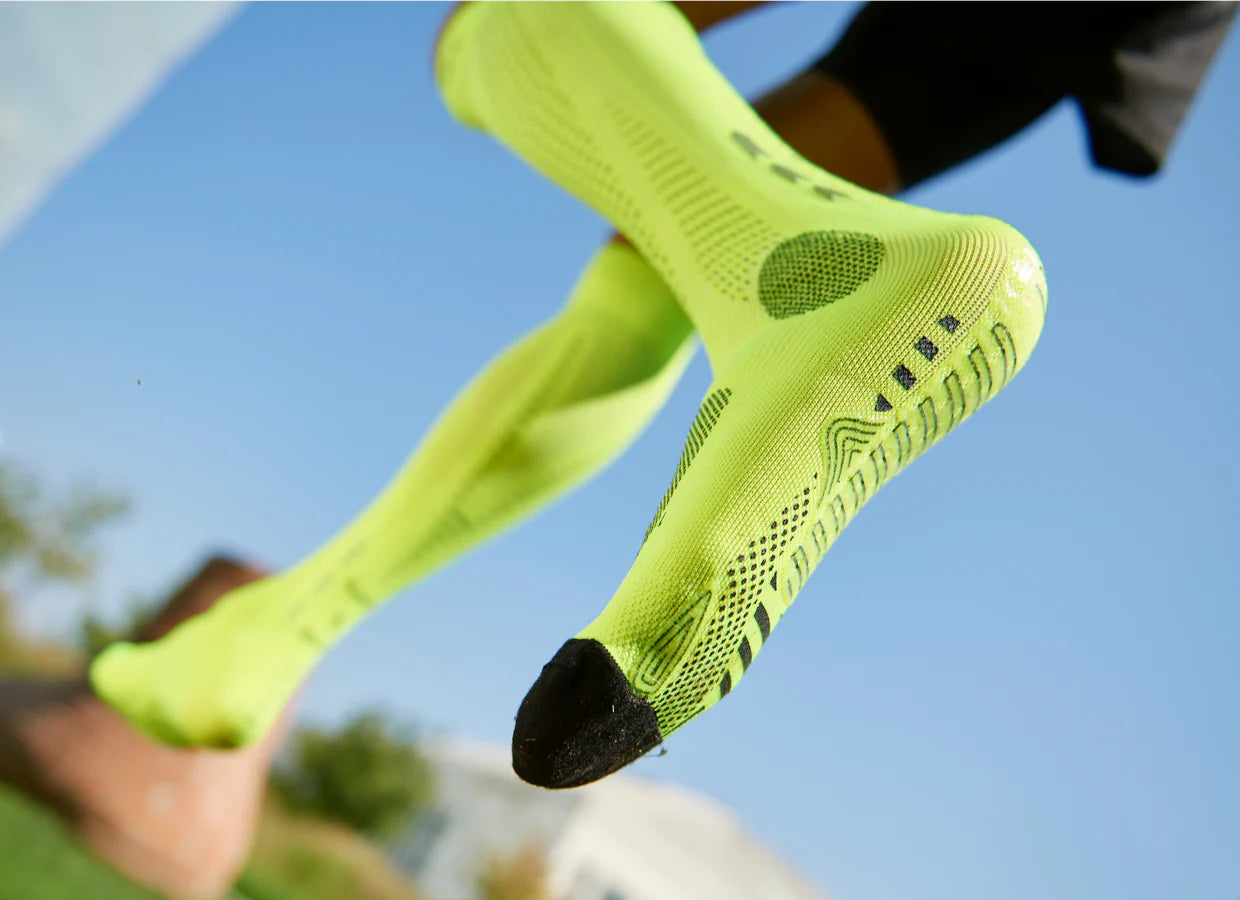
Compression socks may help create a more supported feeling through the lower leg. For pickleball players, this can be useful because the sport depends heavily on quick footwork, balance and lower-leg responsiveness.
Floky compression socks are a strong option for players who want support through the calf, shin and ankle area while they move. They may be especially useful during longer sessions, high-volume playing weeks or when players want a more secure lower-leg feel on court.
Again, compression socks do not prevent every injury and they do not replace good shoes, strength or recovery. But they can be a practical support option for players who want more comfort and confidence through the lower body.
Shoulder, Hip and Lower Back Strain
Pickleball is not only about the elbow, knees and ankles. The shoulder, hips and lower back are also heavily involved.
The shoulder works during serves, overheads, volleys and repeated paddle swings. The hips and lower back help with rotation, reaching, bending and court recovery.
Common contributors to shoulder, hip or back discomfort include:
-
Repeated overhead shots
-
Poor warm-up
-
Reaching too far for wide balls
-
Rotating without good control
-
Bending from the lower back instead of the hips
-
Playing when fatigued
-
Lack of strength through the glutes, core and upper back
For these areas, support gear can sometimes help, but preparation is the bigger priority.
A good warm-up, strength training, mobility, load management and recovery habits are essential. If you are playing multiple times per week, your body needs to be prepared for repeated rotation, bending and fast changes of direction.
For players who want broader lower-body support, the HYPER Man Leggings and HYPER Woman Leggings may also be useful. These provide full lower-body compression and are designed for stability and recovery support through areas including the legs, knees, glutes and surrounding muscle groups.
They may be a good option for players who want support beyond one specific joint, particularly during heavy playing weeks or recovery-focused sessions.
The Biomechanics of Pickleball Movement
Pickleball injuries are often talked about by body part: elbow, wrist, knee, ankle, shoulder.
But the body does not move in isolated parts.
Every point uses a full movement chain.
Your feet set your position. Your ankles react to the court. Your knees absorb and stabilise. Your hips help you rotate and change direction. Your core transfers force. Your shoulder, elbow, wrist and hand control the paddle.
When one area is overloaded or not moving well, another area may compensate.
For example:
-
Poor footwork may increase load through the knees
-
Fatigue in the legs may affect balance and control
-
Excessive grip tension may increase forearm and elbow stress
-
Poor hip rotation may place more demand on the lower back or shoulder
-
Hard-court impact may increase stress through the calves, ankles and knees
This is why biomechanics matters.
Standard compression focuses mainly on pressure. Biomechanical compression considers how the body moves, absorbs force and maintains control.
For pickleball players, Floky’s approach is designed around the way athletes actually move: fast feet, repeated swings, hard-court loading, short sprints and constant changes of direction.
The goal is not just to feel compressed. The goal is to feel supported while moving naturally.
Which Floky Support Fits Your Pickleball Needs?
The best support option depends on where you feel the most load and what type of movement you want to support.
For Elbow and Forearm Support: No Strain Sleeve
The No Strain Sleeve is the hero product for pickleball players dealing with elbow, forearm or grip-related discomfort.
It is designed to provide targeted biomechanical compression through the elbow and forearm area, making it a strong fit for players who want extra support during repeated paddle swings.
Consider the No Strain Sleeve if you want support for:
-
Pickleball elbow
-
Forearm tightness
-
Paddle-arm fatigue
-
Repeated gripping
-
Backhands, drives and volleys
-
Elbow and forearm confidence during play
For Knee Support: Knee Support Knee Brace
The Knee Support Knee Brace is designed for targeted support around the knee and patella.
It may be useful for pickleball players who want a more secure feeling during lunges, direction changes, split steps and hard-court movement.
Consider the Knee Support Knee Brace if you want support for:
-
Knee discomfort
-
Patella-area support
-
Lunging and getting low
-
Side-to-side movement
-
Direction changes
-
Confidence on court
For Calf, Shin and Ankle Support: Floky Compression Socks
Floky compression socks are a strong fit for lower-leg support.
Pickleball depends on quick footwork, so the calves, shins, ankles and feet are constantly working. Compression socks may help players feel more supported through these areas.
Consider compression socks if you want support for:
-
Lower-leg fatigue
-
Calf tightness
-
Shin discomfort
-
Ankle confidence
-
Longer playing sessions
-
Hard-court impact
-
Recovery-focused use
For Broader Lower-Body Support: HYPER Man and HYPER Woman Leggings
The HYPER Man Leggings and HYPER Woman Leggings are designed for full lower-body compression, stability and recovery support.
They may be useful for players who want support beyond one specific area, especially through the legs, knees, glutes and surrounding muscle groups.
Consider HYPER leggings if you want:
-
Full-leg compression
-
Broader lower-body support
-
Stability-focused support
-
Recovery-focused compression
-
Support during heavy playing weeks
-
Comfort across training, sport and recovery
How to Reduce Pickleball Injury Risk
Support gear can be helpful, but injury reduction starts with how you prepare, move and recover.
If you play pickleball regularly, these habits can make a big difference.
Warm Up Properly
A few casual swings before a game is not always enough. Pickleball involves quick reactions, lunges, pivots and repeated arm movement, so your warm-up should prepare the whole body.
Include movements like:
-
Light jogging or skipping
-
Side shuffles
-
Arm circles
-
Gentle lunges
-
Calf raises
-
Hip mobility
-
Practice swings
-
Short reaction drills
Build Playing Volume Gradually
A common mistake is going from no pickleball to playing several times a week. Your body needs time to adapt.
Increase your playing time gradually, especially if you are returning to sport after a break.
Wear Court-Specific Shoes
Running shoes are designed for forward movement. Pickleball involves side-to-side movement, pivots and quick stops.
Court shoes are usually a better choice because they are designed for lateral stability.
Strengthen the Areas Pickleball Uses Most
Useful areas to strengthen include:
-
Calves
-
Quads
-
Hamstrings
-
Glutes
-
Hips
-
Core
-
Shoulders
-
Forearms
-
Upper back
Strength helps your body tolerate the repeated demands of the sport.
Manage Recovery
If you are playing often, recovery matters.
That includes sleep, hydration, rest days, mobility, easy movement and paying attention to early signs of discomfort.
Compression gear, including Floky socks and HYPER leggings, may also be used by some players as part of their recovery routine.
Do Not Ignore Pain That Gets Worse
A small amount of general soreness after play can happen, especially if you are new to the sport. But pain that gets sharper, more persistent or changes the way you move should not be ignored.
The earlier you respond, the easier it is to adjust.
When to Seek Professional Advice
Support gear can help you feel more comfortable and confident, but it is not a substitute for professional care.
Speak with a doctor, physiotherapist or qualified health professional if you experience:
-
Sharp or sudden pain
-
Swelling
-
Pain after a fall, twist or impact
-
Pain that changes how you walk, grip, swing or move
-
A joint that feels unstable
-
Numbness or tingling
-
Pain that does not improve with rest
-
Symptoms that return every time you play
-
Pain that gets worse during a session
Pickleball should feel fun, not like your body is filing a formal complaint.
Final Thoughts
Pickleball is accessible, social and enjoyable, but it still places real demand on the body.
The sport involves quick footwork, repeated paddle swings, hard-court impact, lunges, pivots and constant changes of direction. That is why common pickleball injury areas include the elbow, wrist, knee, ankle, Achilles, shoulder, hip and lower back.
Support gear will not replace good preparation, proper shoes, strength work or recovery. But the right biomechanical compression may help players feel more supported, comfortable and confident on court.
For elbow and forearm support, the Floky No Strain Sleeve is the key product to consider. For knee confidence, the Knee Support Knee Brace provides targeted support around the knee and patella. For lower-leg support, Floky compression socks are a strong option for the calves, shins and ankles. For broader lower-body compression and recovery support, the HYPER Man Leggings and HYPER Woman Leggings may be the best fit.
The goal is not just to play more. It is to move better, recover smarter and stay confident on court.
Explore Floky biomechanical compression support designed for pickleball players who want more comfort, control and confidence every time they play.