The Australian Pickleball Championships are one of the biggest events on the local pickleball calendar, bringing together players across singles, doubles and mixed doubles for several days of high-volume tournament play.
That means preparation matters.
A casual pickleball session might be one or two games, a bit of fun, a coffee after and maybe one questionable line call that lives rent-free in your head for the next week.
Tournament pickleball is different.
At the Australian Pickleball Championships, players may be backing up across multiple matches, waiting between games, warming up again, cooling down again, managing heat, staying fuelled, recovering between sessions and trying to keep their body feeling fresh enough to move well late in the day.
That is why your pickleball tournament gear matters.
The right setup should help you feel comfortable, supported and prepared before, during and after play. It should cover your on-court needs, between-match needs and recovery needs.
For serious tournament players, gear is not just about what looks good. It is about what helps you move, support your body and recover properly across a demanding event.
At Floky, we approach support through the lens of biomechanics. That means thinking about how the body moves as a connected system. In pickleball, that matters because every point involves fast feet, short accelerations, sudden stops, lunges, paddle swings, grip control and repeated court impact.
This Australian Pickleball Championships gear guide breaks down what to pack for match day, what to wear on court and what to use for recovery after long days of tournament play.
Why the Australian Pickleball Championships Need a Different Gear Setup
Pickleball looks simple from the outside, but tournament play places a lot of repeated demand on the body.
Across an event like the Australian Pickleball Championships, players may deal with:
-
Multiple matches
-
Repeated warm-ups
-
Long waits between games
-
Sudden stops and starts
-
Fast side-to-side movement
-
Lunges and low dinks
-
Repeated paddle swings
-
Grip and forearm fatigue
-
Hard-court impact
-
Calf, knee and ankle load
-
Heat and sweat
-
Fatigue late in the day
This is where preparation matters.
A tournament setup should help you manage three key phases:
-
Before play: warm-up, readiness and comfort
-
During play: support, movement and confidence
-
After play: recovery, comfort and preparation for the next match or next day
Most players think about the paddle first. That makes sense. But once you are in a full tournament day, your socks, support gear, spare clothes, recovery tools, food, hydration and between-match routine all become just as important.
The player who packs well has fewer distractions.
And at the Australian Pickleball Championships, fewer distractions is a very good thing.
Pickleball Tournament Gear Checklist
A good tournament bag should include:
-
Paddle or backup paddle
-
Court shoes
-
Supportive pickleball socks
-
Spare socks
-
Comfortable playing clothes
-
Towel
-
Hat or visor
-
Sunscreen if outdoors
-
Water bottle
-
Electrolytes
-
Easy snacks
-
Recovery compression gear
-
Warm-up layer
-
Spare shirt
-
Knee, ankle or arm support if needed
-
Small first-aid basics
-
Phone, charger and tournament schedule
-
Recovery sandals or comfortable shoes for after play
The goal is not to bring your entire wardrobe, your pantry and a physio table.
The goal is to be ready for the demands of the day.
1. Pickleball Socks: Your Foundation for Court Movement
If there is one piece of gear tournament players often underestimate, it is socks.
Pickleball depends on quick footwork. You are constantly split-stepping, shuffling, lunging, stopping, pivoting and pushing off. Even though the court is smaller than a tennis court, the movement is sharp and repetitive.
That means your feet, ankles, calves and Achilles are working hard all day.
A good pickleball sock should support:
-
Foot stability inside the shoe
-
Side-to-side movement
-
Quick starts and stops
-
Comfort during long matches
-
Grip and control inside the shoe
-
Arch support
-
Achilles comfort
-
Blister management
-
Lower-leg confidence
For tournament play, basic everyday socks are usually not enough. They may slip, bunch, hold sweat or create friction once the day gets long.
Product Recommendation: S-MASH 3D Sock
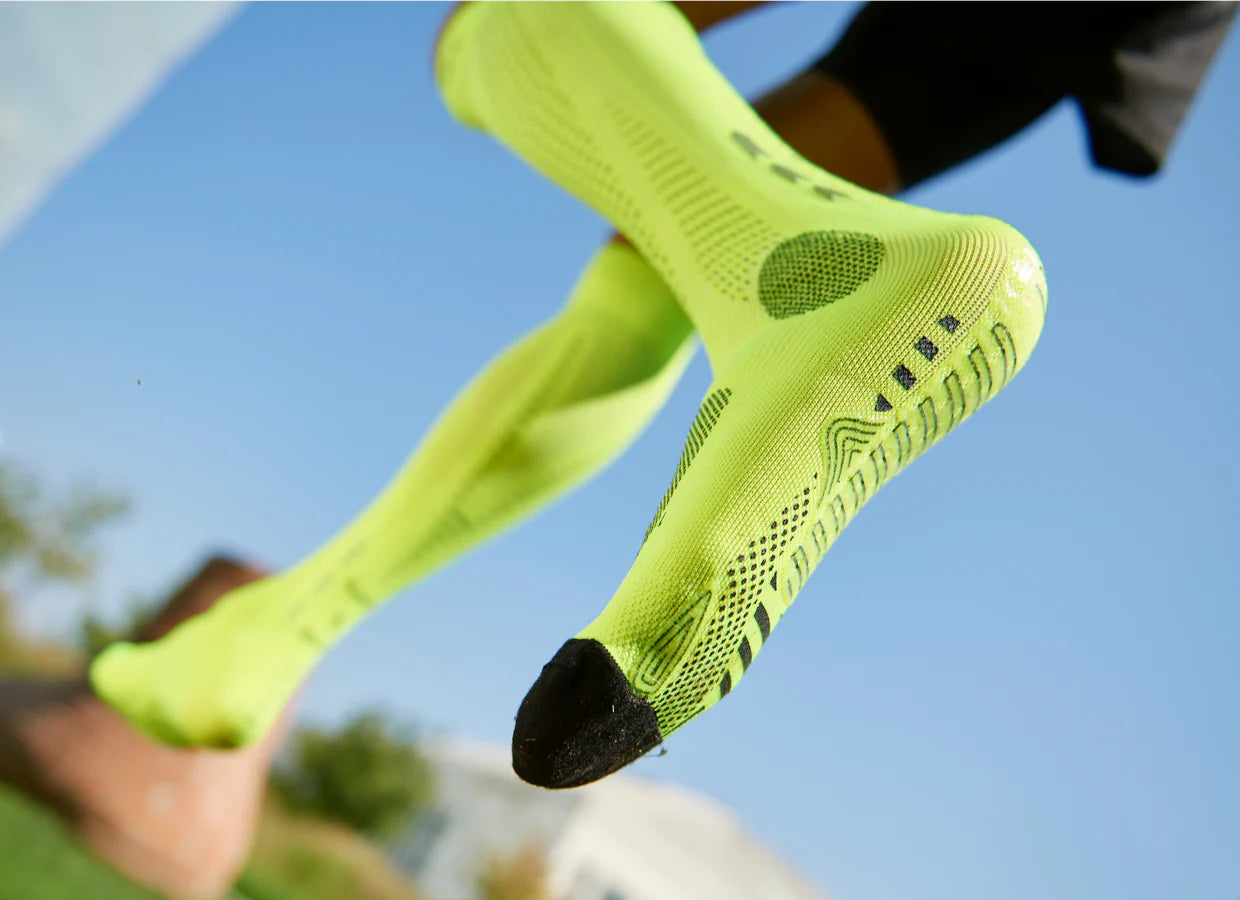
The Floky S-MASH 3D Sock is the hero product for pickleball tournament play.
It is designed for racquet and paddle sports, making it a strong fit for pickleball players who need stability, support and comfort during repeated court movement.
The S-MASH 3D Sock is especially relevant for:
-
Quick direction changes
-
Split steps
-
Lunges
-
Short accelerations
-
Push-offs
-
Hard-court movement
-
Long tournament days
-
Players wanting more support than a standard sports sock
For pickleball players, the sock is not just a comfort item. It is part of the connection between the foot, shoe and court.
When your feet feel secure, the rest of your movement can feel more confident.
2. Spare Socks: Do Not Skip Them
One pair of good socks is helpful.
A spare pair is smarter.
Tournament days can involve heat, sweat, long waits and multiple matches. Changing into a fresh pair of socks between events or after a long match can make a big difference to comfort.
Pack at least one spare pair, especially if you are playing across multiple brackets.
Fresh socks can help with:
-
Comfort
-
Friction management
-
Sweat control
-
Foot freshness
-
Resetting before the next match
This is one of those small things that feels unnecessary until it suddenly becomes the best decision you made all day.
3. Elbow and Forearm Support for Paddle Control
Pickleball places repeated demand through the elbow, forearm and wrist.
Even though the paddle is lighter than a tennis racquet, the arm is constantly working. Dinks, drives, volleys, blocks, resets and serves all require grip control, wrist control and forearm endurance.
Across a tournament day, this repeated load can build.
Players may notice:
-
Forearm tightness
-
Elbow discomfort
-
Grip fatigue
-
Arm soreness after matches
-
Reduced paddle control late in the day
-
Discomfort during backhands, volleys or drives
This is where arm support can be useful.
Product Recommendation: No Strain Sleeve
The Floky No Strain Sleeve is the key product for pickleball players wanting elbow and forearm support.
It is designed to provide biomechanical compression through the elbow and forearm area. For tournament players, this may help create a more supported feeling during repeated paddle movements.
The No Strain Sleeve may be useful for:
-
Paddle-arm support
-
Forearm fatigue
-
Elbow support
-
High-volume match days
-
Doubles and mixed doubles tournaments
-
Players who rely heavily on touch, resets and quick volleys
-
Return-to-play phases
The goal is not to restrict the arm. The goal is to support the movement chain that controls the paddle.
For pickleball players, that matters because the forearm and wrist are involved in almost every point.
4. Knee Support for Lunges, Stops and Direction Changes
Pickleball can be tough on the knees.
The sport involves constant changes of direction, short accelerations, hard stops, split steps and low positions. Players often lunge for dinks, bend into defensive positions and push off quickly to recover.
Across multiple matches, this can place repeated load through the knees.
Common tournament knee demands include:
-
Lunging for low balls
-
Getting down near the kitchen
-
Side shuffling
-
Split stepping
-
Stopping suddenly
-
Pushing off to recover
-
Playing on hard courts
-
Backing up for multiple matches
For players who want extra confidence around the knee, targeted support may help.
Product Recommendation: Knee Support Knee Brace
The Floky Knee Support Knee Brace is a strong option for players wanting targeted support around the knee and patella.
It may be useful during tournament play when the knees are repeatedly loaded across matches.
Consider the Knee Support Knee Brace if you want support during:
-
Lunges
-
Direction changes
-
Split steps
-
Hard-court movement
-
Longer tournament days
-
Return-to-play phases
-
Sessions where your knee feels less confident
A knee support can help provide a more secure, supported feeling during movement.
It should not be used to push through sharp, worsening or persistent pain. If knee pain is affecting the way you move, professional advice is the right call.
5. Lower-Body Compression for Recovery Between Matches
Tournament pickleball is not only about what you wear during matches.
It is also about what you do between them.
Between matches, players often sit around, cool down, stiffen up, warm up again and then try to perform. If you are playing across multiple events, recovery becomes part of your tournament strategy.
Lower-body compression can be useful as part of that between-match or post-match routine.
It may help players feel more supported through areas such as:
-
Calves
-
Shins
-
Knees
-
Quads
-
Hamstrings
-
Glutes
-
Hips
Product Recommendation: HYPER Man and HYPER Woman Leggings
The HYPER Man Leggings and HYPER Woman Leggings are best positioned as broader lower-body compression and recovery support options.
They may be useful for players who want support beyond the foot and ankle, especially after long match days or during high-volume tournament weeks.
Consider HYPER leggings for:
-
Post-match recovery
-
Between-day recovery
-
Lower-body support after multiple matches
-
Players who feel heavy through the legs after tournament play
-
Travel home after competition
-
Recovery-focused use after hard sessions
They are not a replacement for sleep, hydration, nutrition or proper recovery, but they can form part of a smarter tournament recovery routine.
6. Recovery Socks for After Play
After a full day of pickleball, the lower legs can feel heavy.
That is especially true after multiple matches, long waits, repeated warm-ups and hard-court movement.
Recovery socks can be useful after play when athletes want a supported lower-leg feel.
Product Recommendation: RE-CHARGE Sock
The RE-CHARGE Sock is the key recovery-focused sock option.
It is best used after play rather than as the main match sock.
Consider the RE-CHARGE Sock for:
-
Post-tournament recovery
-
Travel home after a long day
-
Recovery between tournament days
-
Lower-leg support after multiple matches
-
Players who feel heavy through the calves or shins after play
For tournament players, it can be useful to pack recovery gear before the event. The version of you after six matches will not be making elite decisions. It will be looking for shade, snacks and somewhere to sit.
7. Clothing: Keep It Light, Breathable and Tested
Tournament clothing should be comfortable, breathable and tested before the day.
Avoid anything that rubs, restricts movement or becomes heavy with sweat.
For the Australian Pickleball Championships, choose clothing that allows:
-
Lunging
-
Reaching
-
Rotating
-
Serving
-
Quick footwork
-
Bending low
-
Repeated starts and stops
Look for:
-
Lightweight tops
-
Breathable fabrics
-
Shorts, skirts or leggings that stay in place
-
No heavy cotton
-
No untested new gear
-
No seams or waistbands that annoy you during movement
The golden rule is simple:
Do not wear anything new on tournament day.
If you have not tested it during a proper pickleball session, do not debut it at a tournament.
Tournament day is not the time to discover your shorts have betrayal in their heart.
8. Hydration and Fuel
Gear matters, but so does energy.
Pickleball tournaments can involve long days, warm conditions and unpredictable match timing. You may play, wait, play again, eat quickly, warm up again and then back up for another match.
Pack simple, familiar options.
Consider:
-
Water
-
Electrolytes
-
Bananas
-
Muesli bars
-
Rice cakes
-
Sandwiches
-
Easy carbohydrates
-
Simple salty snacks
-
Protein for later in the day
-
Food you know your stomach handles well
Avoid trying new supplements, energy drinks or foods on tournament day.
Your stomach does not need a plot twist during mixed doubles.
9. Between-Match Essentials
Between matches, you want to stay comfortable without fully switching off.
Pack items that help you reset.
Useful between-match items include:
-
Towel
-
Spare shirt
-
Spare socks
-
Warm-up layer
-
Hat or visor
-
Sunscreen
-
Small massage ball
-
Resistance band
-
Electrolytes
-
Light snacks
-
Recovery socks or leggings
-
Slides or comfortable shoes
-
Phone charger
-
Tournament schedule
The aim is to stay ready without staying tense for hours.
You want to cool down enough to recover, but not so much that your body feels stiff when the next match is called.
10. Warm-Up Gear and Routine
A pickleball tournament warm-up should prepare the whole body.
You need to be ready for quick feet, lunges, swings and reaction-based movement.
A good warm-up may include:
-
Light jogging
-
Side shuffles
-
Gentle lunges
-
Calf raises
-
Hip mobility
-
Shoulder circles
-
Wrist and forearm prep
-
Short reaction steps
-
Practice dinks, volleys and serves
Your support gear should be tested during warm-up.
Check that:
-
Socks feel secure
-
Knee support does not restrict movement
-
No Strain Sleeve allows natural paddle control
-
Shoes feel comfortable
-
Clothing does not rub or ride up
A warm-up is not just for the body. It is also the final gear check.
11. What to Wear During Match Play
A strong tournament match setup could include:
-
S-MASH 3D Sock
-
Court shoes
-
Breathable playing outfit
-
No Strain Sleeve if you want elbow/forearm support
-
Knee Support Knee Brace if you want targeted knee support
-
Hat or visor if outdoors
-
Wristband or towel for sweat management
For most players, the S-MASH 3D Sock should be the first Floky product to consider because footwork is central to pickleball.
From there, support choices depend on the player:
-
If your arm gets tired, consider the No Strain Sleeve
-
If your knee needs extra confidence, consider the Knee Support Knee Brace
-
If your legs feel heavy after long sessions, consider RE-CHARGE Socks or HYPER Leggings for recovery
Tournament gear should be personal. Do not wear support just for the sake of it. Wear what helps you feel comfortable, supported and ready to compete.
12. What to Wear After Matches for Recovery
After match play, recovery becomes the priority.
This is especially important if you are playing multiple events or backing up the next day.
After matches, consider:
-
Changing into dry socks
-
Putting on recovery socks
-
Wearing compression leggings
-
Eating and drinking
-
Walking lightly
-
Cooling down gradually
-
Stretching gently if it feels good
-
Keeping warm between long breaks
-
Avoiding sitting completely still for too long
Recovery Product Setup
A smart Floky recovery setup could include:
-
RE-CHARGE Sock for lower-leg recovery support
-
HYPER Man or HYPER Woman Leggings for broader lower-body compression
-
No Strain Sleeve if your elbow or forearm feels loaded after play
-
Knee Support Knee Brace if you want continued knee support after heavy match play
Recovery gear is not magic. But it can help you feel more supported and comfortable while your body settles after repeated effort.
13. Tournament Bag Setup: Simple Version
If you want a simple pickleball tournament packing list, start here.
Match-Day Gear
-
Paddle
-
Backup paddle if available
-
Court shoes
-
S-MASH 3D Socks
-
Spare socks
-
Playing outfit
-
Spare shirt
-
Towel
-
Hat or visor
-
Sunscreen
-
Water bottle
-
Electrolytes
-
Easy snacks
Support Gear
-
No Strain Sleeve for elbow and forearm support
-
Knee Support Knee Brace for targeted knee support
-
Ankle support if needed
-
Any personal support items you already use and have tested
Recovery Gear
-
RE-CHARGE Socks
-
HYPER Man or HYPER Woman Leggings
-
Slides or comfortable shoes
-
Dry clothes
-
Recovery snacks
-
Light mobility tool or massage ball
Admin and Extras
-
Phone
-
Charger or power bank
-
Tournament schedule
-
ID or registration details
-
Small first-aid basics
-
Plastic bag for sweaty gear
14. Floky Product Guide for Australian Pickleball Championships Players
The best Floky product depends on what you want to support.
| Player Need | Recommended Product | Best Use |
|---|---|---|
| Foot stability and court movement | S-MASH 3D Sock | During match play |
| Elbow and forearm support | No Strain Sleeve | During matches, warm-ups and high-volume play |
| Knee confidence and patella support | Knee Support Knee Brace | During play or warm-ups |
| Lower-leg recovery | RE-CHARGE Sock | After matches or between tournament days |
| Broader lower-body recovery | HYPER Man / HYPER Woman Leggings | After long match days or heavy tournament blocks |
For most tournament players, the best starting point is:
S-MASH 3D Sock for match play + RE-CHARGE Sock for recovery.
From there, add targeted support based on your needs:
-
No Strain Sleeve for arm support
-
Knee Support Knee Brace for knee support
-
HYPER leggings for broader recovery
15. Common Tournament Gear Mistakes
Wearing New Gear on Tournament Day
Never race-test new gear during competition.
That includes shoes, socks, sleeves, braces, shorts and tops.
If it has not been tested in training, leave it out.
Packing Only One Pair of Socks
Socks get sweaty fast. A spare pair can be a lifesaver during long days.
Ignoring Recovery Until After the Event
Recovery should be planned before the tournament, not improvised afterwards.
Pack recovery socks, dry clothes and food before you leave home.
Overpacking Support Gear You Do Not Need
Support gear is helpful when it matches your body and your sport demands.
You do not need to wear everything at once. Pick what helps you move better and feel more confident.
Forgetting Between-Match Comfort
Tournament days involve waiting. Bring warm layers, snacks, electrolytes and dry gear so you are not stuck uncomfortable between matches.
When to Seek Professional Advice
Support gear can help you feel more comfortable and confident, but it should not be used to ignore pain.
Speak with a doctor, physiotherapist or qualified health professional if you experience:
-
Sharp or sudden pain
-
Swelling
-
Pain after a fall, twist or impact
-
Pain that changes how you move
-
Knee, ankle, elbow or wrist instability
-
Numbness or tingling
-
Pain that gets worse during play
-
Pain that does not improve with rest
-
Symptoms that return every time you play
Pickleball tournaments are demanding. If something does not feel right, get it checked.
Final Thoughts
The Australian Pickleball Championships demand more from your body than a casual hit.
Across multiple matches, warm-ups, long waits and recovery periods, you need gear that helps you move well, stay comfortable and feel supported on court.
For match play, the S-MASH 3D Sock is the key Floky product for foot stability, support and court movement. For arm support, the No Strain Sleeve is a strong option for elbow and forearm comfort. For knee support, the Knee Support Knee Brace can help players feel more secure during lunges, split steps and direction changes. For recovery, the RE-CHARGE Sock and HYPER Leggings are useful options after long match days.
The goal is simple.
Pack gear that helps you feel comfortable, supported and ready to play your best pickleball across every match.
Explore Floky biomechanical support for players preparing for the Australian Pickleball Championships, tournament match play and post-game recovery.