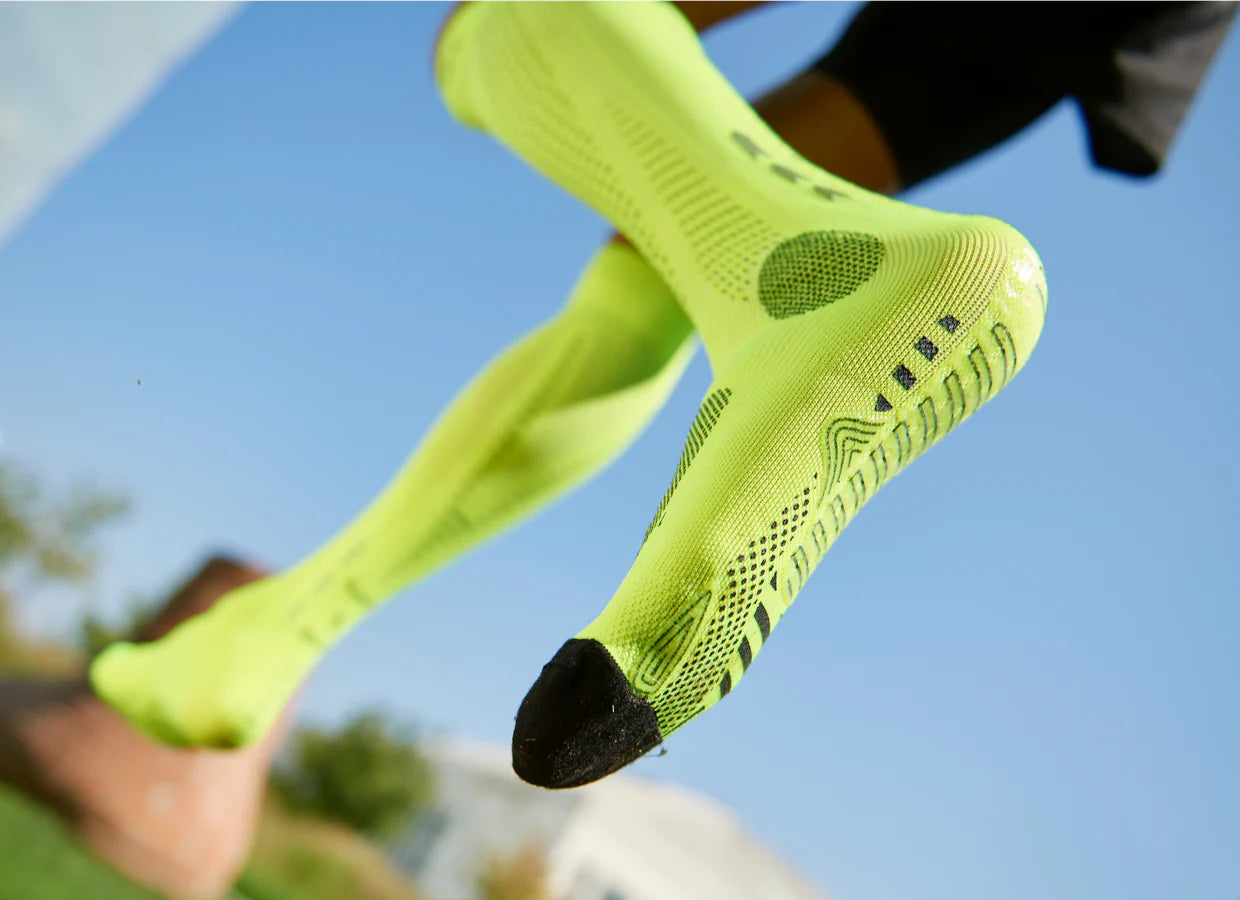
Hyrox is not just a run.
It is not just a gym workout either.
It is the slightly chaotic middle ground where running, strength endurance and functional fitness all decide to meet in one very sweaty room.
A Hyrox race combines repeated 1km runs with functional workout stations including sled pushes, sled pulls, burpee broad jumps, rowing, farmers carries, lunges, SkiErg and wall balls. That means your race-day outfit needs to handle a lot more than jogging in a straight line.
The right Hyrox gear needs to support:
-
Running
-
Sweat
-
Heat
-
Floor work
-
Lunges
-
Sled pressure
-
Grip-heavy movements
-
Full-body fatigue
-
Compromised movement late in the race
This is why what you wear for Hyrox matters.
The best Hyrox outfit should help you move freely, stay comfortable and feel supported from the first run to the final wall ball. It should not rub, ride up, overheat, restrict your movement or make you regret every gear decision somewhere around the sled push.
At Floky, we approach performance gear through the lens of biomechanics. That means looking at how the body moves, absorbs force and maintains control under fatigue.
For Hyrox athletes, that matters because every station asks something different from the body.
Why Hyrox Gear Is Different From Normal Gym Gear
Normal gym gear may be fine for a standard weights session.
Running gear may be fine for a road run.
But Hyrox is different because it demands both.
You need clothing that works while running, then still feels comfortable when you drop into burpee broad jumps, drive into sled pushes, grip farmers carries, row, lunge and throw wall balls.
A good Hyrox outfit needs to handle:
-
Repeated 1km runs
-
High sweat levels
-
Changing movement patterns
-
Full range of motion
-
Repeated bending and lunging
-
Contact with the floor
-
Grip and upper-body work
-
Lower-body fatigue
-
Race-day heat and intensity
This is where many athletes get caught out.
Loose clothing may feel comfortable at the start, then bunch, rub or get in the way. Heavy cotton can hold sweat and feel uncomfortable. Socks that work fine in the gym may rub during repeated running. Compression that feels good standing still may feel too restrictive once you are racing.
Hyrox gear needs to be tested under movement and fatigue.
The goal is simple: wear gear that supports the body without distracting you.
What to Wear for Hyrox: The Simple Formula
A strong Hyrox race-day outfit can be built around a simple formula:
Supportive socks + compression shorts or leggings + breathable top + optional targeted support gear.
That gives you a setup that covers the main demands of the event:
-
Socks for running, lower-leg support and comfort
-
Shorts or leggings for lower-body movement and stability
-
A breathable top for heat and sweat management
-
Targeted support gear for knees, ankles or arms if needed
-
Recovery gear for after the race
Hyrox is hard enough without fighting your own outfit.
The right gear should feel secure, breathable and movement-friendly from start to finish.
Hyrox Socks: Why Compression Matters for Running and Stations
If there is one piece of gear Hyrox athletes should think carefully about, it is socks.
Hyrox includes 8 x 1km runs. That alone makes sock choice important. But your legs are not only running. They are also pushing sleds, pulling sleds, lunging, jumping, carrying, rowing and stabilising under fatigue.
That means your calves, shins, ankles and feet are constantly working.
Good Hyrox socks can help support:
-
Running comfort
-
Lower-leg stability
-
Calf and shin support
-
Foot comfort inside the shoe
-
Sweat and friction management
-
Confidence during transitions
-
Recovery after high-volume work
Compression socks are popular with many athletes because they provide a firm, supported feeling through the lower leg. For Hyrox, that can be useful because the lower body is under repeated demand from both running and functional stations.
RUN UP Long Sock
The RUN UP Long Sock is a strong option for athletes who want more lower-leg compression and support across running-heavy Hyrox sessions.
It is the best fit for athletes who want support through the calf and shin area while managing repeated running, sleds, lunges and fatigue.
Consider the RUN UP Long Sock if you want:
-
More lower-leg coverage
-
Calf and shin support
-
Compression during repeated running
-
A supported feeling during longer sessions
-
Race-day and training use
RUN UP Medium Sock
The RUN UP Medium Sock is a good option for athletes who want support in a lower-profile sock.
It may suit athletes who prefer less coverage than a long sock but still want a supportive running sock for training and race day.
Consider the RUN UP Medium Sock if you want:
-
A lower-profile option
-
Running-focused support
-
Comfort across race-day movement
-
A sock that can handle both running and gym-style work
RE-CHARGE Sock
The RE-CHARGE Sock is best positioned for post-race or post-training recovery support.
Hyrox can leave the legs feeling heavy, especially after repeated runs, sleds and lunges. Recovery-focused compression may be useful after racing or hard training sessions when athletes want a supported lower-leg feel.
Consider the RE-CHARGE Sock if you want:
-
Post-race support
-
Recovery-focused compression
-
Lower-leg comfort after hard sessions
-
A sock to use after Hyrox training or competition
For Hyrox, socks are not just an accessory. They are part of your race system.
Hyrox Shorts: Compression, Comfort and Movement
Shorts are a popular choice for Hyrox because they offer freedom of movement and help athletes stay cooler during high-intensity racing.
But not all shorts are ideal.
Hyrox shorts need to handle running, lunges, burpees, rowing, sled work and wall balls without riding up, bunching or restricting movement.
Look for shorts that provide:
-
Comfortable compression
-
Freedom through the hips
-
No excessive bunching
-
Reduced chafing
-
Breathable fabric
-
Secure fit under fatigue
-
Comfort during lunges and burpees
-
Enough support without feeling restrictive
ACTIVATOR Shorts
The ACTIVATOR Shorts are a strong fit for Hyrox athletes who want lower-body compression, stability and comfort without the heat or coverage of full leggings.
They are a practical race-day option because they can support movement across both running and functional stations.
The ACTIVATOR Shorts may be useful for:
-
Race day
-
Running intervals
-
Sled pushes and pulls
-
Lunges
-
Burpees
-
Wall balls
-
Gym-based Hyrox prep
-
Hotter race conditions
For athletes who prefer a cooler, lighter setup, compression shorts are often the sweet spot.
Hyrox Leggings: When Full Lower-Body Compression Makes Sense
Some athletes prefer leggings for Hyrox, especially during training or cooler race conditions.
Full lower-body compression may make sense if you want more coverage, more support through the legs or a recovery-focused feel during heavy training blocks.
Leggings may be useful for:
-
Cooler race days
-
Longer training sessions
-
Recovery-focused sessions
-
Athletes who prefer more coverage
-
Lower-body support across knees, quads, glutes and calves
-
High-volume Hyrox training weeks
HYPER Man Leggings
The HYPER Man Leggings are best suited to men wanting full lower-body compression, stability and recovery support.
They may be useful during Hyrox training blocks where the body is taking repeated load from running, sleds, lunges and strength-endurance work.
Consider HYPER Man Leggings if you want:
-
Full lower-body compression
-
Stability support
-
Recovery-focused use
-
Coverage through the full leg
-
Support across training and recovery
HYPER Woman Leggings
The HYPER Woman Leggings offer the same broader lower-body support option for women.
They may be useful for athletes who want compression through the legs, knees, glutes and surrounding muscle groups during training, racing or recovery.
Consider HYPER Woman Leggings if you want:
-
Full-leg compression
-
Stability-focused support
-
Recovery support
-
More coverage than shorts
-
Support through heavy training blocks
For race day, the choice between shorts and leggings usually comes down to personal preference, temperature and how much compression coverage you want.
Hyrox Tops: Breathability Over Everything
Hyrox gets hot quickly.
Between running, sleds, rowing, burpees, lunges and wall balls, your heart rate climbs and sweat builds fast. A heavy or restrictive top can become uncomfortable early.
A good Hyrox top should be:
-
Lightweight
-
Breathable
-
Comfortable when sweaty
-
Flexible through the shoulders
-
Suitable for running
-
Suitable for rowing, SkiErg and wall balls
-
Not too loose or distracting
-
Not made from heavy cotton
Avoid anything that holds sweat, restricts shoulder movement or feels heavy once wet.
OXY-GEN Jersey
The OXY-GEN Jersey is the natural top recommendation for athletes wanting a breathable race-day option.
It is well suited to Hyrox because the upper body needs freedom of movement across SkiErg, rowing, wall balls, sled pulls and running.
The OXY-GEN Jersey may be useful for:
-
Race day
-
High-sweat training sessions
-
Conditioning workouts
-
Running intervals
-
Functional fitness sessions
For Hyrox tops, simple is usually best: breathable, light and easy to move in.
Targeted Support Gear for Hyrox
Hyrox loads the whole body.
For some athletes, targeted support gear may be useful for areas that feel under more demand, such as the knees, ankles, elbows or forearms.
Support gear should not be used to push through sharp or worsening pain. But when used appropriately, it may help athletes feel more secure and confident during movement.
Knee Support
Hyrox can place high demand on the knees.
The knees are involved in:
-
Running
-
Lunges
-
Wall balls
-
Burpee broad jumps
-
Sled pushes
-
Sled pulls
-
Station transitions
-
Fatigue-based movement control
The Knee Support Knee Brace is a strong option for athletes wanting targeted support around the knee and patella during training or racing.
It may help create a more secure, supported feeling during movements that place repeated load through the knee.
Consider knee support if you want extra confidence during:
-
Lunges
-
Running
-
Wall balls
-
Sleds
-
Burpees
-
Return-to-training phases
If knee pain is sharp, swollen, worsening or changing how you move, seek professional advice.
Ankle Support
Hyrox includes repeated running, fast transitions and fatigue. As athletes get tired, foot and ankle control can become more challenging.
The Ankle Support product may be useful for athletes wanting targeted ankle support during running and functional movement.
It may be relevant if you want a more supported feeling during:
-
Running
-
Burpee broad jumps
-
Lunges
-
Sled transitions
-
Fatigue-based movement
-
Return-to-training phases
As with all support products, the goal is confidence and comfort, not ignoring pain that needs attention.
Arm and Forearm Support
The lower body takes a lot of Hyrox load, but the upper body is not exactly having a holiday.
SkiErg, rowing, sled pulls, farmers carries and wall balls all demand grip, forearm control, elbow stability and upper-body endurance.
The No Strain Sleeve may be useful for athletes wanting elbow and forearm support during grip-heavy or upper-body-loaded sessions.
It may be relevant for:
-
SkiErg
-
Rowing
-
Sled pulls
-
Farmers carries
-
Wall balls
-
High-volume training blocks
-
Athletes who also do racquet sports or gym training
It is not the hero product for Hyrox, but it fits well as targeted support for the elbow and forearm.
What Not to Wear for Hyrox
Hyrox race day is not the time to discover that your shorts hate lunges.
Avoid:
-
Brand-new shoes
-
Brand-new socks
-
Untested compression gear
-
Heavy cotton clothing
-
Loose shorts that ride up or catch
-
Tops that hold sweat
-
Socks that rub or cause blisters
-
Overly tight compression that restricts movement
-
Jewellery or distracting accessories
-
Thick layers unless conditions require them
-
Anything you have not tested under fatigue
The golden rule is simple:
Do not race in anything you have not trained in.
Everything should be tested before race day. Socks, shorts, leggings, tops and support gear should all be worn during sessions that mimic race demands.
Race-Day Outfit Examples
Different athletes prefer different setups. The best Hyrox outfit is the one that feels comfortable, supportive and tested.
Here are three simple ways to build your race-day kit.
Minimal Race-Day Setup
This is for athletes who want lightweight support and freedom of movement.
Recommended setup:
Best for:
-
Hot conditions
-
Athletes who prefer less coverage
-
First-time racers
-
Those who want a simple, breathable setup
Compression-Focused Setup
This is for athletes who want more lower-leg and lower-body support.
Recommended setup:
Best for:
-
Athletes who like compression
-
Running-heavy training blocks
-
Longer preparation sessions
-
Race day support and comfort
Support-Heavy Setup
This is for athletes who want targeted support across high-load areas.
Recommended setup:
-
Knee Support or Ankle Support if needed
-
No Strain Sleeve if upper-body support is desired
Best for:
-
Athletes with specific support preferences
-
High-volume training weeks
-
Return-to-training phases
-
Competitors wanting a more secure race-day feel
The key is not to wear every support product just because it exists. Choose the gear that matches your body, your training and your comfort needs.
What to Wear After Hyrox for Recovery
Hyrox does not end when you cross the finish line.
Your legs have just handled repeated running, sleds, lunges, burpees, wall balls and carries. It is normal for athletes to feel heavy, tired or generally cooked after a race.
Recovery gear can be useful after Hyrox, especially if you need to travel home, walk around after the event or manage next-day soreness.
RE-CHARGE Sock for Post-Race Recovery
The RE-CHARGE Sock is the best fit for post-race lower-leg recovery support.
It may be useful after Hyrox when your calves, shins and lower legs feel heavy from repeated running and station work.
Consider using the RE-CHARGE Sock after:
-
Race day
-
Hard simulation workouts
-
Running-heavy sessions
-
Sled and lunge sessions
-
High-volume training weeks
HYPER Leggings for Broader Recovery Support
The HYPER Man Leggings and HYPER Woman Leggings may be useful after Hyrox if you want broader lower-body compression and recovery-focused support.
They are especially relevant when the whole lower body feels loaded, including the quads, hamstrings, glutes, knees and calves.
Recovery is not just about gear, of course. Sleep, hydration, food, walking, mobility and sensible training choices all matter.
But having recovery gear ready before race day is smarter than trying to make decisions while your legs are negotiating terms.
How to Test Your Hyrox Outfit Before Race Day
Your race-day gear should be tested before the event.
A simple way to test your outfit is to wear it during a Hyrox-style session that includes both running and stations.
Example test session:
-
1km run
-
Functional station
-
1km run
-
Functional station
-
1km run
-
Functional station
During the session, check:
-
Do your socks rub?
-
Do your shorts or leggings stay in place?
-
Does your top handle sweat?
-
Does support gear restrict movement?
-
Does anything cause chafing?
-
Does compression feel supportive or too tight?
-
Does the outfit still feel good when you are tired?
-
Can you run, lunge, row, push, pull and jump comfortably?
This does not need to be a full race simulation. It just needs to expose your gear to the types of movement it will face on race day.
If something annoys you in training, it will probably annoy you more when racing.
Where Biomechanics Fits Into Hyrox Gear
Hyrox is a full-body test.
Your body has to run, push, pull, carry, lunge, jump, row and throw under fatigue. That means each part of the body is constantly interacting with the next.
Biomechanics matters because every station changes how force moves through the body.
For example:
-
Running loads the feet, calves, shins, knees and hips
-
Sled pushes load the legs, trunk, shoulders and arms
-
Sled pulls challenge grip, posture and lower-body bracing
-
Lunges demand knee, hip and ankle control
-
Wall balls require lower-body drive and upper-body coordination
-
Farmers carries challenge grip, posture and lower-leg stability
-
Burpee broad jumps load the feet, ankles, knees, hips, trunk and shoulders
This is why Hyrox gear should not only be about looking fast in the warm-up area.
It should support the way your body moves.
Generic compression focuses mainly on pressure. Floky’s biomechanical approach focuses on movement, stability and control.
That is the difference.
The goal is not just to feel compressed. The goal is to feel supported through the movements Hyrox actually demands.
Final Thoughts
Choosing what to wear for Hyrox is about more than picking an outfit that looks good on race photos.
Your gear needs to handle repeated running, sleds, lunges, burpees, carries, rowing, SkiErg, wall balls, sweat, heat and fatigue.
A strong race-day setup should include supportive socks, compression shorts or leggings, a breathable top and any targeted support gear your body needs.
For lower-leg support, the RUN UP Long Sock or RUN UP Medium Sock are strong options. For post-race recovery, consider the RE-CHARGE Sock. For lower-body compression, the ACTIVATOR Shorts, HYPER Man Leggings or HYPER Woman Leggings may be useful depending on your preference. For targeted support, the Knee Support, Ankle Support and No Strain Sleeve can help athletes feel more secure in high-load areas.
Hyrox is demanding. Your gear should help you move with more comfort, control and confidence from the first run to the final wall ball.
Explore Floky running and compression gear designed to support athletes through every Hyrox run, station and recovery session.