Running injuries are frustratingly common. Up to 79% of recreational runners experience at least one running-related injury per year — and most of them are overuse injuries that are largely preventable. In Australia, where year-round running on hard bitumen surfaces is the norm, the risk is even higher.
This guide covers the most common running injuries in Australian athletes, what causes them, and how biomechanical compression gear from Floky fits into a science-backed injury prevention strategy.
The Most Common Running Injuries in Australian Runners
Medial Tibial Stress Syndrome (Shin Splints)
Shin splints — pain along the inner tibia — are the most common overuse injury in Australian runners. They're caused by repetitive loading of the tibial bone and surrounding soft tissue, typically when training load increases too quickly.
→ Full prevention guide: How to Prevent Shin Splints Australia
Patellofemoral Pain Syndrome (Runner's Knee)
Pain around or behind the kneecap from poor patellar tracking and quadriceps loading. Most common in female runners and those with reduced hip abductor strength.
Patellar Tendinopathy (Jumper's Knee)
Pain at the base of the kneecap from repetitive loading of the patellar tendon. Common in runners who also do plyometric or jump training.
IT Band Syndrome
Lateral knee pain from iliotibial band tightness and hip abductor weakness. More prevalent in high-mileage runners and cyclists.
Plantar Fasciitis
Heel and arch pain from excessive tension on the plantar fascia. Often linked to calf tightness and rapid mileage increases.
Calf Strain and Achilles Tendinopathy
Both are common in runners who have increased training intensity without adequate progressive loading of the posterior chain.
The Root Causes of Most Running Injuries
Running injuries are almost always driven by one or more of these factors:
1. Training load errors — increasing mileage or intensity too quickly. The 10% rule (no more than 10% weekly increase) is a useful starting guide, though total load in hours and intensity are as important as distance.
2. Biomechanical factors — overpronation, hip drop, knee valgus, and overstriding all alter how forces are distributed through the kinetic chain, concentrating stress in vulnerable structures.
3. Muscle weakness — weak glutes, hip abductors, and calf muscles force tendons and joints to absorb load that muscles should be managing.
4. Inadequate recovery — insufficient sleep, poor nutrition, and hard running on consecutive days without adequate tissue repair time.
5. Surface — Australian runners who train predominantly on concrete are exposed to significantly higher impact forces than those who mix in grass or trail running.
How Floky Biomechanical Compression Reduces Running Injury Risk
RUN UP Long Sock — Shin Splint and Calf Protection
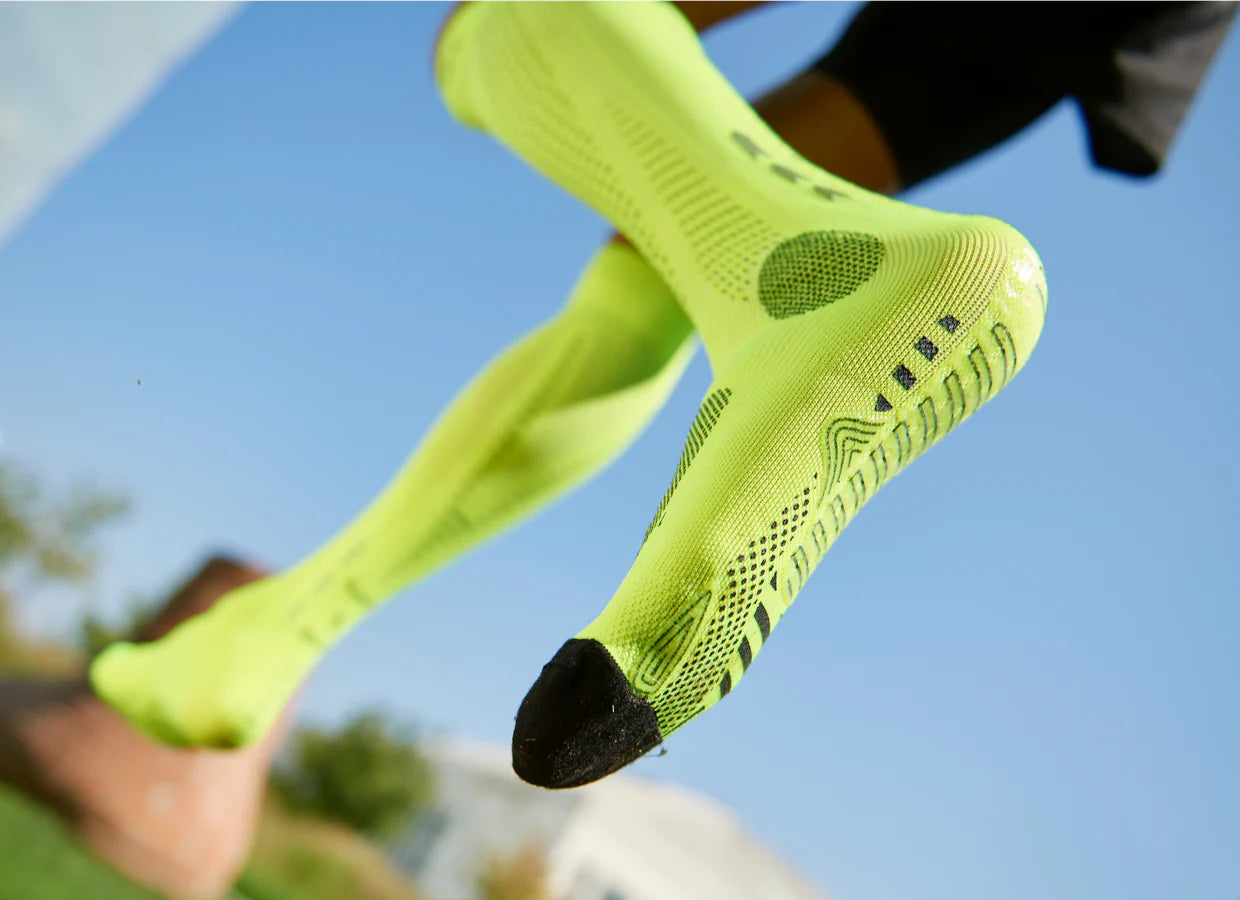
The RUN UP's biomechanical print pattern activates the tibialis anterior and calf muscle chain during ground contact, reducing the force transmitted directly to the tibial surface. This makes it the most effective prevention tool for shin splints among runners with high training loads.
Wearing the RUN UP post-run (30–60 minutes) also accelerates tibial bone and soft tissue recovery.
AXSIST 2.0 — Calf and Achilles Support
For runners managing calf tightness or Achilles loading, the AXSIST 2.0 supports the gastrocnemius-soleus complex and improves venous return in the posterior chain.
Knee Support Brace — Patellofemoral and Patellar Tendon Protection
Targets patellar tracking and reduces peak tendon load — directly addressing the two most common knee injury mechanisms in runners.
→ Full guide: Best Knee Support for Sport in Australia
ACTIVATOR Shorts — Hip Drop and Knee Valgus Correction
Runners with hip abductor weakness experience hip drop and knee valgus during the stance phase — a pattern that loads the IT band, patellofemoral joint, and medial knee. The ACTIVATOR Shorts promote gluteus medius and TFL activation, addressing this compensatory pattern at the source.
Evidence-Based Injury Prevention Strategies for Australian Runners
-
Progressive loading — increase weekly volume by ≤10%; schedule a deload week every 3–4 weeks
-
Strength training — 2x per week targeting glutes, hip abductors, calf complex, and single-leg stability
-
Surface variety — mix concrete with grass, trail, or treadmill to vary tibial loading
-
Footwear management — replace shoes every 600–800km; rotate between two pairs if possible
-
Biomechanical compression — Floky RUN UP or AXSIST 2.0 for every training run
-
Cadence — target 170–180 steps per minute to reduce overstriding and ground impact forces
When to See a Professional
If any pain persists beyond 2 weeks of reduced training, or if you experience sharp point tenderness on the tibia, see a sports physiotherapist. Tibial stress fractures, full-thickness tendon tears, and cartilage issues require imaging and specific management protocols.
Shop Floky Running Support Gear
Available at floky.com.au.
-
Free shipping on orders over $140
-
Afterpay available
-
4.6/5 stars from 1,647+ Australian reviews
Related reads: