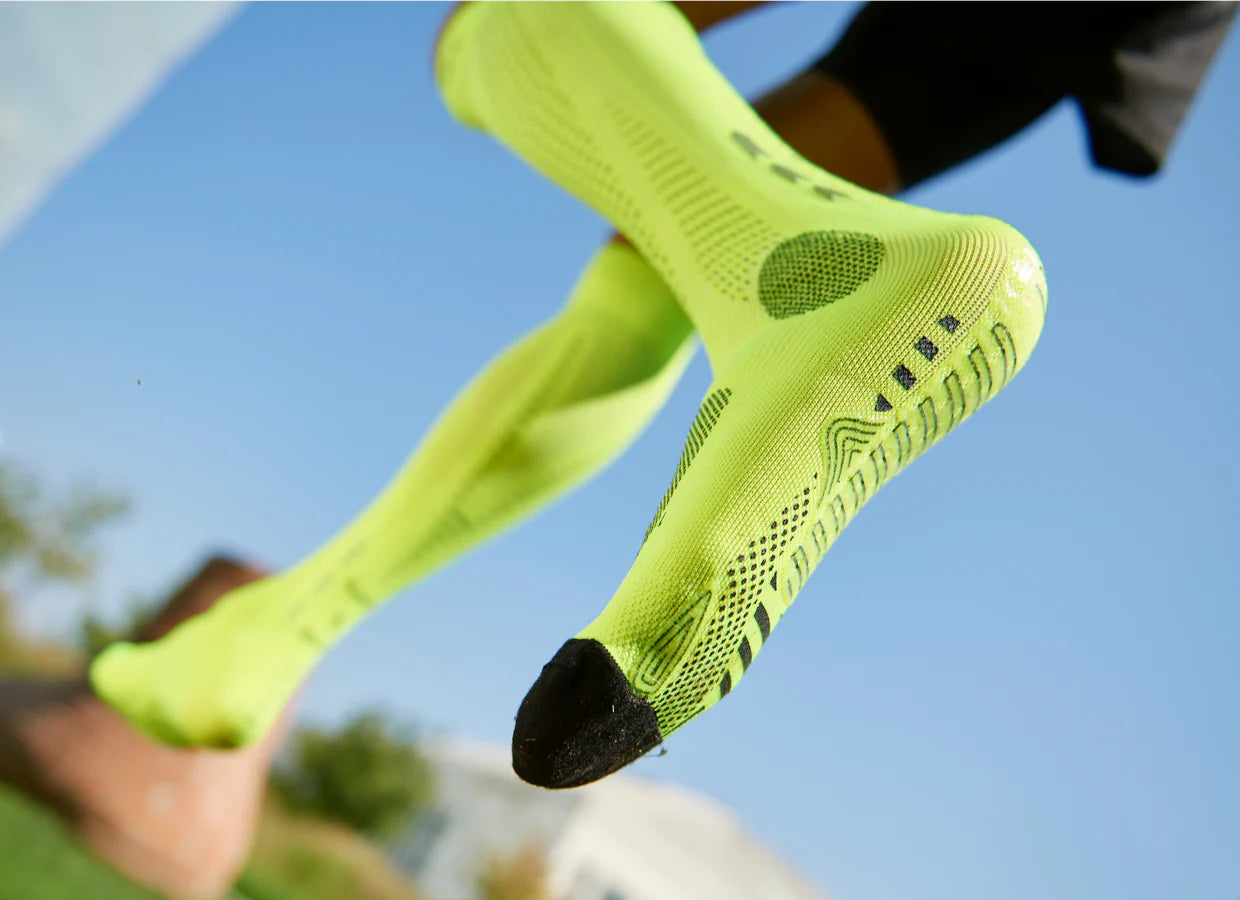
Shin splints — medically known as medial tibial stress syndrome (MTSS) — are one of the most common overuse injuries affecting Australian runners, footballers, and fitness athletes. They're frustrating, persistent, and all too often the thing that derails a training block or a season.
This guide covers what causes shin splints, how to prevent them, how to manage them when they appear, and — critically — how biomechanical sportswear from Floky can form a practical part of your prevention and recovery strategy.
What Are Shin Splints?
Shin splints refer to pain along the inner edge of the tibia (shinbone), typically felt during or after running. The pain is caused by inflammation of the muscles, tendons, and bone tissue surrounding the tibia — usually as a result of repetitive stress exceeding the tissue's capacity to recover.
Common symptoms:
-
Dull aching pain along the inner shin during or after exercise
-
Tenderness when pressing along the tibia
-
Mild swelling in the lower leg
-
Pain that improves with rest but returns when training resumes
Left unmanaged, shin splints can progress to tibial stress fractures — a much more serious injury requiring extended time off. Early intervention is always the right move.
What Causes Shin Splints in Australian Athletes?
Training Load Errors
The single biggest cause. Increasing weekly mileage or training intensity too quickly — more than 10% per week — is the classic trigger. This is especially common at the start of the season or after a period of detraining.
Surface and Terrain
Hard surfaces like concrete footpaths and synthetic tracks amplify impact forces transmitted to the tibia. Australian urban runners training on footpaths year-round are at higher risk than those mixing in grass or trail running.
Biomechanical Factors
Overpronation, a weak tibialis anterior, poor hip stability, and inadequate ankle dorsiflexion all alter the way forces are distributed through the lower leg — increasing the load on the tibial bone and surrounding soft tissue.
Footwear
Worn-out running shoes that have lost cushioning and stability are a common contributing factor. Replace running shoes every 600–800 km.
Inadequate Recovery
Not allowing enough time between hard sessions for the tibial bone and surrounding tissue to repair increases cumulative stress with each session.
6 Evidence-Based Ways to Prevent Shin Splints
1. Build Load Progressively
Use the 10% rule as a guide: increase weekly training volume by no more than 10% each week. Include a "down week" every 3–4 weeks where you reduce volume by 20–30% to allow tissue adaptation.
2. Strengthen the Tibialis Anterior and Calf Complex
Weak lower leg muscles increase the stress placed on the tibia. Add targeted strength work: calf raises (both straight-leg and bent-knee), tibialis anterior raises, and single-leg balance exercises.
3. Improve Running Form
High-cadence running (around 170–180 steps per minute) reduces overstriding and lowers impact forces. A forward-leaning posture and midfoot strike pattern distributes load more evenly through the kinetic chain.
4. Vary Your Running Surfaces
Mix concrete with grass, trail, or treadmill running to vary impact forces and reduce repetitive loading on the same tissue planes.
5. Wear Biomechanical Compression Gear
This is where Floky's technology provides a genuine edge. Standard compression socks apply pressure. Floky's biomechanical compression socks apply functional stimulation patterns that activate the lower leg musculature — reducing vibration at the tibial surface and improving shock absorption through improved muscle co-activation.
6. Prioritise Recovery
Sleep, nutrition, and active recovery between sessions determine how effectively your tibial bone and soft tissue adapt to training load. Under-fuelling or under-sleeping in heavy training blocks dramatically increases injury risk.
Floky Products for Shin Splint Prevention and Recovery
TACKLE Shin Guards
Floky's TACKLE Shin Guards are engineered for athletes in contact sports who need direct tibial protection alongside biomechanical muscle support. For football, soccer, and AFL players managing shin pain, the TACKLE provides impact absorption at the tibial surface combined with Floky's signature screen-printed muscle activation pattern.
Best for: Soccer, AFL, rugby, hockey — any sport involving contact or stud impact on the lower leg
RUN UP Long Compression Sock
The RUN UP is Floky's dedicated running compression sock and one of the most effective prevention tools for shin splints. The full-length graduated compression profile activates the tibialis anterior and calf muscle chain, while the biomechanical print pattern damps tibial surface vibration during ground contact.
Wearing the RUN UP during training sessions reduces the cumulative microtrauma to the tibial bone — and wearing them for 30–60 minutes post-run accelerates tissue recovery.
Best for: Road runners, trail runners, endurance athletes
AXSIST 2.0 Compression Socks
For athletes whose shin pain is linked to calf tightness and fatigue, the AXSIST 2.0 focuses on the calf muscle chain — improving venous return and reducing the compensatory load on the anterior shin muscles.
Managing Shin Splints When They Appear
If you're already experiencing shin pain, here's a practical management approach:
Immediate:
-
Reduce training load — don't stop completely unless pain is severe, but cut volume and intensity significantly
-
Apply ice to the painful area for 15–20 minutes after training
-
Avoid running on hard surfaces until pain has subsided
Short-term (1–2 weeks):
-
Swap high-impact sessions for low-impact alternatives: cycling, swimming, pool running
-
Continue lower leg strengthening (pain-free range)
-
Wear Floky compression socks during activity and in the 60 minutes post-session
Return to running:
-
Return gradually — start with run/walk intervals on soft surfaces
-
Monitor pain levels using a 0–10 scale; stay below 3/10 during activity
-
Use the RUN UP Long Sock or AXSIST 2.0 for all sessions during the return phase
👉 See also: Best Compression Socks Australia 2026
Shin Splints in AFL and Rugby Players
Shin splints aren't limited to runners. AFL and rugby players face an elevated risk due to the combination of high running volumes, hard grounds (especially in the Australian summer season), and direct contact forces on the lower leg.
The TACKLE Shin Guards were specifically designed for this context — providing both biomechanical support and physical protection in a single product.
👉 Read more: AFL & Rugby Training Equipment: What the Pros Use
When to See a Physio
If shin pain persists beyond 2–3 weeks of reduced training, or if you experience sharp point tenderness on the tibia (rather than diffuse aching), see a sports physiotherapist or doctor. Tibial stress fractures require a significantly different management protocol to standard shin splints, and early diagnosis prevents a minor injury from becoming a major setback.
Final Thoughts
Shin splints are preventable. Progressive training loads, targeted strengthening, good footwear, and biomechanical compression support from Floky form the core of an effective prevention strategy. If you're already in pain, act early — the sooner you address it, the faster you'll be back to full training.
Browse Floky's full range of compression socks and lower leg support gear at floky.com.au.
Related reads: