Most athletes think of training as the thing that makes them stronger. In reality, the adaptation happens between sessions, while you recover. The quality of that recovery decides how you feel at your next run, match or session, and whether fatigue from one workout quietly carries into the next. This is why so many Australian athletes now reach for compression socks as part of their post-training routine.
This guide explains what actually happens in your legs after hard training, how compression is commonly used to support recovery, and why Floky’s biomechanical approach is engineered to do more than a standard compression sock.
What Happens in Your Legs After Hard Training
A demanding session leaves your lower legs in a temporary state of stress. Three things tend to happen at once.
First, your working muscles produce metabolic by-products as they generate energy. When you stop, these by-products and the fluid around them need to be cleared.
Second, blood and fluid can pool in the lower legs, especially after long periods on your feet or repeated impact. Gravity works against you here, and sluggish return of blood toward the heart slows the clean-up process.
Third, fatigue sets in. Tired muscles lose some of their control and coordination, which is part of why a second session on heavy legs often feels harder and carries more injury risk. Poorly controlled, fatigued movement loads muscles and joints in ways that fresh, well-supported movement does not.
Good recovery is about helping your body reverse these three things faster, so your legs feel fresher and better supported before the next session.
How Compression Is Commonly Used for Recovery
Compression garments are widely used by athletes to support circulation during the recovery window. The idea is straightforward. Gentle external pressure on the lower leg is thought to assist the return of blood and fluid toward the heart, helping to reduce the pooling and swelling that follow hard efforts.
Graduated compression takes this further. Pressure is strongest at the ankle and tapers as it moves up the leg, encouraging fluid to move upward rather than settle in the feet and calves. Many athletes wear compression socks after training, on recovery days, and during long periods of sitting or travel, when the legs are most prone to stiffness and swelling.
It is worth being clear about expectations. Compression is a support tool, not a cure. It is commonly used because it may help athletes feel less heavy and better supported between sessions, alongside the basics of sleep, nutrition and sensible training load.
Why Biomechanics Matters: Floky Versus Standard Compression
Here is where most compression socks stop and Floky begins. A conventional compression sock applies a fairly even squeeze around the whole leg. It offers some of the circulatory support described above, and not much else.
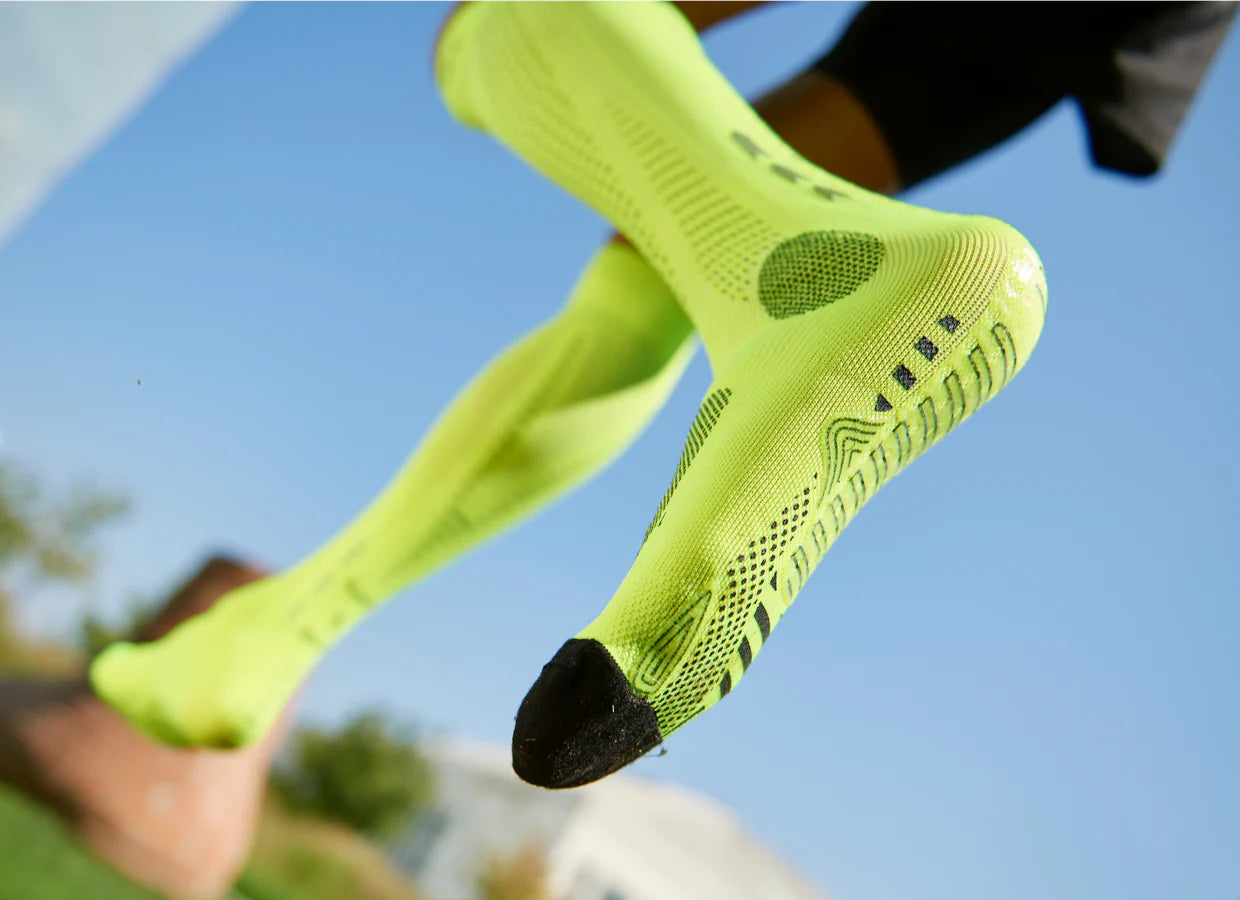
Floky is built as the next step in compression. Its core technology is biomechanical screen-printing, a proprietary pattern printed onto the compression fabric that interacts with the body’s musculoskeletal system rather than simply pressing on it. This is the point of difference. Instead of one uniform pressure, Floky’s design is targeted, structured and engineered for greater results than a standard compression garment.
Four features set it apart for recovery:
Medical grade compression (21 to 24 mmHg). This is stronger than the light compression of everyday socks, which are designed mainly for comfort and minor swelling. The firmer pressure is intended to give the circulatory system more meaningful support during recovery.
Graduated pressure. Compression is strongest at the ends of the legs, where blood flow is greatest, and tapers upward. This is designed to push deoxygenated blood, which carries the by-products of exercise, up toward the heart, and to return fresh oxygenated blood to the area.
Targeted and structured design. The silicon print is scientifically positioned over specific tendons and muscles, so support is concentrated where the leg needs it rather than spread evenly and thinly.
Breathable zones. Areas with no compression let the skin breathe and release perspiration. Unlike conventional garments that squeeze the whole leg uniformly, Floky leaves room for comfort during the longer wear times that recovery often involves.
The RE-CHARGE Sock
Floky’s dedicated recovery sock is the RE-CHARGE Sock. It applies the graduated, medical grade, biomechanically printed compression described above in a sock built specifically for the hours after training rather than the activity itself.
Who it suits:
-
Runners and team sport athletes managing heavy, fatigued legs between sessions
-
Court sport players recovering from the impact of hard surfaces
-
Older active adults who want to reduce post-activity stiffness and swelling
-
Anyone facing long travel or long days on their feet after training
What it is designed to do:
-
Support venous return to help clear the by-products of exercise
-
Reduce the heavy, swollen feeling that follows demanding sessions
-
Keep the lower leg supported while the muscles rest and adapt
For athletes who want recovery support higher up the chain, the ACTIVATOR Shorts apply the same biomechanical principles across the glutes, hips and quads, the large muscle groups that take the longest to recover after running and team sport.
How to Use Compression Socks for Recovery
Getting value from recovery compression is mostly about timing and consistency.
Put them on soon after you finish, once you have cooled down, and wear them through the early recovery window when blood and fluid are most likely to pool. Many athletes keep them on for a few hours, or wear them during the evening after an evening session.
Recovery days are another good time. On the day after a hard run or match, wearing compression socks while you go about ordinary activity can help the legs feel less heavy. Long travel, whether a flight to a tournament or a long drive, is also a sensible moment, since sitting still encourages exactly the kind of pooling compression is meant to counter.
The point is to support the body during the window when it does its repair work, not to replace the rest, fuel and sleep that drive recovery.
When Recovery Needs More Than Compression
Compression socks are a tool for everyday recovery and fatigue management. They are not a treatment for injury. Speak to a sports physiotherapist or doctor when:
-
Pain is sharp, localised, or does not settle with rest
-
Swelling is significant, one-sided, or comes with heat and redness
-
Calf pain is severe or unexplained, which always warrants prompt medical assessment
-
Recovery is not improving despite sensible training, sleep and nutrition
A professional can identify what is actually driving the problem and build a plan around it. Floky’s recovery products are designed to complement that kind of management, not stand in for it.
Shop Floky Recovery Socks in Australia
Floky recovery products are available at floky.com.au.
-
RE-CHARGE Sock for targeted, graduated post-training support
-
ACTIVATOR Shorts for recovery across the hips, glutes and quads
-
Free shipping on orders over $140
-
Afterpay available
-
48 to 72 hour dispatch from Rydalmere, NSW
-
4.6 out of 5 stars across 1,647 and more Australian reviews
Related reads: - Why Wear Compression Socks: The Biomechanics Explained - Best Compression Socks Australia 2026 - The Best Type of Knee Support for Running - How to Prevent Shin Splints: A Runner’s Recovery Guide