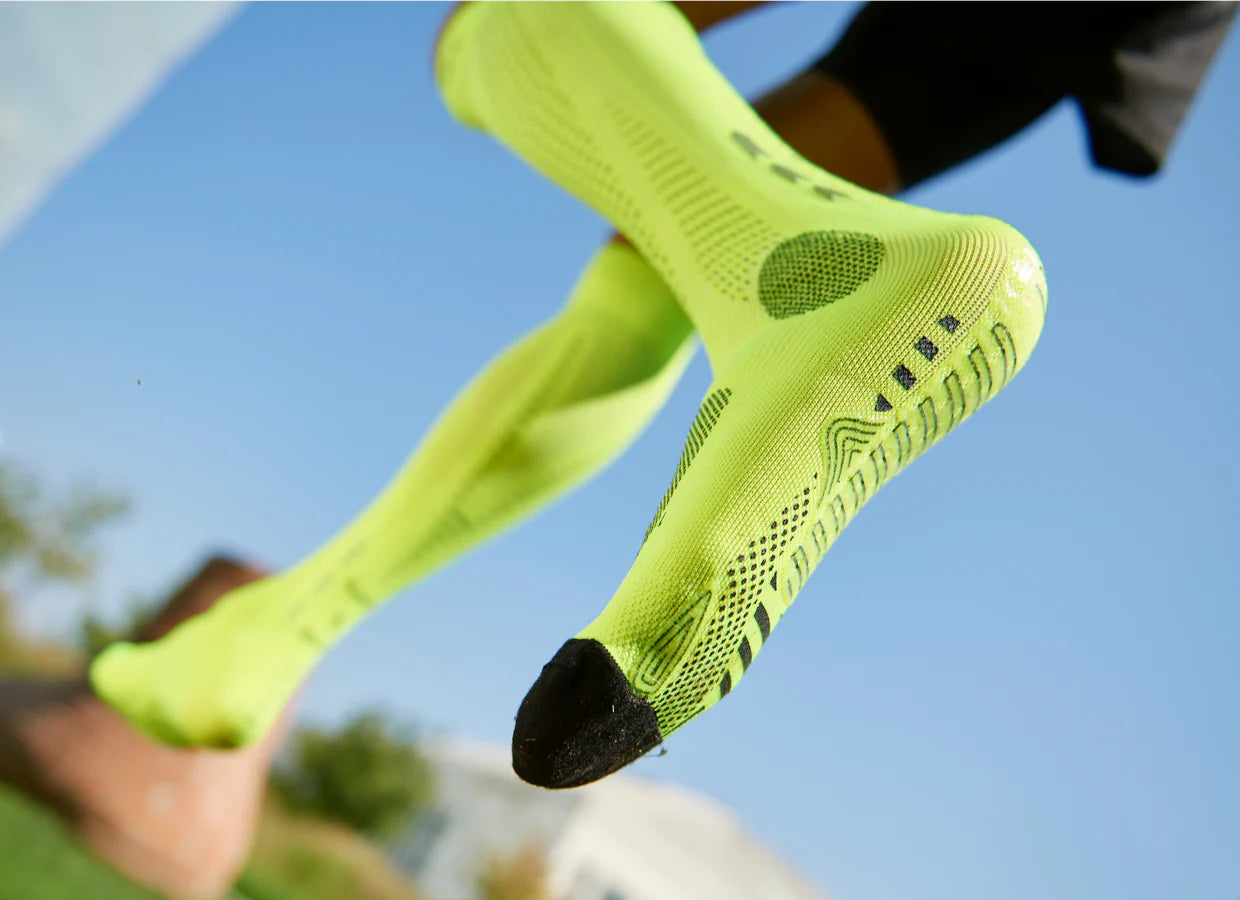
Running is simple in theory. One foot in front of the other, repeat until happy, tired or questioning every life choice that led to hill sprints.
But while running looks simple, the body is doing a lot of work with every stride. Your feet, ankles, knees, hips, glutes and core all have to absorb impact, control movement and help you keep moving forward.
That is why knee discomfort can be so frustrating for runners. Even a small feeling of irritation, instability or uncertainty around the knee can change the way you move. You might shorten your stride, avoid hills, skip runs or feel less confident when training.
This is where knee support for running can be useful.
A knee sleeve, brace or compression support will not fix an injury on its own, and it should not be used to ignore pain that needs attention. But the right support may help provide compression, warmth, feedback and confidence while you move.
At Floky, we look at knee support through the lens of biomechanics. That means thinking about how the body moves as a connected system, not just how much compression can be applied to one joint.
For runners, that difference matters.
Why Runners Use Knee Support
Runners use knee support for a range of reasons. Some are looking for extra comfort. Others want a greater sense of stability or control. Some are returning to running after time off and want to feel more supported while they rebuild confidence.
Common reasons runners look for knee support include:
-
Knee discomfort during or after running
-
A feeling of instability
-
Extra support on longer runs
-
Confidence when returning to training
-
Warmth around the knee joint
-
Support during hills, trails or uneven terrain
-
Greater body awareness while running
-
Comfort during repeated impact
The most important thing is to understand what knee support can and cannot do.
A knee sleeve or compression support may help you feel more supported during movement, but it will not replace strength work, good load management, recovery or professional advice when needed.
Think of it as part of your running toolkit, not the entire toolbox.
Is It Okay to Run With a Knee Sleeve?
Yes, many runners use knee sleeves or compression knee support while running. The key is choosing support that is comfortable, secure and designed for movement.
A running knee sleeve should feel supportive without restricting your stride. It should stay in place, allow your knee to bend naturally and feel comfortable over repeated steps.
You should not feel:
-
Numbness
-
Pinching
-
Excessive tightness
-
Restricted movement
-
Skin irritation
-
Increased pain
-
Bunching behind the knee
-
Constant slipping or rolling down
If your knee support causes any of these issues, it may not be the right fit, style or level of compression for running.
The goal is not to lock the knee in place. The goal is to support comfortable, confident movement.
What Running Knee Support Is Designed to Do
Running knee sleeves and compression supports can help in a few key ways.
Compression
Compression provides a firm, supportive feeling around the knee. This can help the joint feel more secure while you run.
For runners, compression needs to be balanced. Too little support may not feel useful. Too much compression can feel restrictive or uncomfortable.
A good running knee support should feel snug and stable without changing your natural stride.
Floky’s Knee Support Knee Brace is designed to provide targeted support around the knee and patella during movement. It is made for active use, helping create a secure and supported feel without unnecessary bulk.
Warmth
Many runners find that knee support helps keep the joint area warm during activity. This can be especially helpful during colder conditions, warm-ups or lower-intensity runs.
Warmth does not fix the cause of pain, but it may help some runners feel more comfortable as they move.
Proprioception
Proprioception is your body’s awareness of where it is in space. It is how your brain understands joint position, control and movement without you needing to consciously think about every step.
When you wear compression around the knee, it gives your body sensory feedback. This may help you feel more aware of your knee position while running.
For runners, this can be valuable because running is repetitive. Small changes in control, fatigue or movement awareness can affect how confident you feel over time.
Confidence
Knee discomfort can make runners hesitant. You might become more cautious on descents, avoid speed work or feel unsure during longer sessions.
Knee support can help create a greater sense of stability and confidence. It does not mean you should push through worsening pain, but it may help you feel more supported during comfortable movement.
The Biomechanics of Running and Knee Support
The knee is often where people feel discomfort, but it is rarely working alone.
Running is a full-body movement. Every stride involves a chain of actions:
-
The foot contacts the ground
-
The ankle absorbs and transfers force
-
The knee bends and stabilises
-
The hip controls leg position
-
The glutes help create power and stability
-
The core helps manage posture and balance
If one part of the chain is overloaded, fatigued or not controlling movement well, the knee may feel the effect.
This is why biomechanics matters.
Biomechanics is the study of how the body moves. In running, it looks at how force travels through the body, how joints work together and how movement patterns affect comfort, efficiency and control.
Biomechanical compression is not just about making something tight. It is about supporting the way the body moves.
For knee support, that means helping the runner feel stable and supported while still allowing natural movement.
Why Knee Support for Running Is Different From General Knee Support
Not every knee support is ideal for running.
Some braces are designed to restrict movement or provide a higher level of structure. That may be useful in specific situations, especially when recommended by a health professional, but it can feel too bulky or restrictive for regular running.
Knee support for running should usually be:
-
Lightweight
-
Comfortable
-
Breathable
-
Flexible
-
Secure during movement
-
Able to handle sweat
-
Supportive without being bulky
-
Easy to wear over repeated strides
-
Designed to move with the body
For most runners, the best support is the one they can actually run in comfortably.
Floky’s Knee Support Knee Brace is a targeted option for runners who want specific support around the knee and patella. For runners wanting broader lower-body support, the HYPER Man Leggings and HYPER Woman Leggings offer full-leg compression designed for stability and recovery.
When Knee Support May Be Useful for Running
Knee support may be useful when you want added comfort, feedback or confidence during a run.
This may include:
-
Returning to running after time off
-
Building back into longer distances
-
Running on trails or uneven ground
-
Running hills
-
Speed sessions
-
Gym-to-run training blocks
-
Times when the knee feels less stable
-
Runs where extra warmth feels helpful
-
Sessions where you want a more supported feeling
The important thing is to use support intelligently.
If your knee feels better with support and you can run comfortably, it may be a useful addition. If pain is increasing, changing your stride or affecting your ability to run normally, it is worth getting assessed.
Running With a Knee Sleeve: Common Mistakes
Knee support can be helpful, but only when used properly. Here are some common mistakes runners make.
Wearing Support That Is Too Tight
More compression does not always mean better support. If a knee sleeve is too tight, it can feel restrictive, uncomfortable or distracting.
A good fit should feel firm and secure, not painful.
Using Support to Ignore Pain
Knee support should not be used to push through pain that is getting worse. If pain is sharp, persistent or changing the way you run, support is not the answer on its own.
It may help you feel more comfortable, but it should not replace proper advice or recovery.
Choosing a Bulky Brace for Normal Running
Some runners choose the most structured brace they can find, thinking more support must be better. But for running, too much structure can interfere with natural movement.
Unless you have been advised otherwise, many runners are better suited to flexible compression support.
Not Checking Fit During Movement
A knee support might feel fine standing still but slide, bunch or pinch once you start running.
Always think about how it feels during actual movement, not just when you first put it on.
Expecting Support to Fix Training Load Issues
If knee discomfort is being driven by doing too much too soon, poor recovery or sudden changes in training, a knee sleeve alone will not solve the issue.
Support can help, but smart training still matters.
What to Look for in Running Knee Sleeves
When choosing knee support for running, look for a product that supports movement rather than restricts it.
Key features to consider include:
-
Comfortable compression
-
Secure fit
-
Flexible design
-
Breathable fabric
-
Support around the knee and patella
-
No excessive bulk
-
Durability for repeated training
-
Comfort during longer runs
-
A design that works with athletic movement
This is where Floky’s biomechanical approach stands apart from basic compression gear.
The goal is not just to compress the knee. The goal is to support the way the body moves.
How Floky Supports Runners Differently
Floky’s approach is built around biomechanics, movement and active support.
For runners, support needs to feel stable without getting in the way. It needs to move with the body, provide comfort over repeated strides and help the athlete feel more confident during activity.
The Floky Knee Support Knee Brace is designed to provide targeted support around the knee and patella. It uses biomechanical applications, fabric compression and protective silicone bands to help create a secure, supportive feel during movement.
For runners who want full lower-body compression, the HYPER Man Leggings and HYPER Woman Leggings offer broader support across the legs. These leggings are designed for stability and recovery, with targeted compression through areas including the knees, glutes and surrounding muscle groups.
A simple way to choose:
-
Choose the Knee Support Knee Brace if your main focus is targeted knee support while running.
-
Choose the HYPER Man Leggings if you want full-leg compression and recovery support for men.
-
Choose the HYPER Woman Leggings if you want full-leg compression and recovery support for women.
-
Consider full-leg compression if you want support beyond the knee alone.
Knee Support, Strength and Recovery
Knee support can be useful, but it works best alongside good training habits.
For runners, this may include:
-
Gradually increasing distance
-
Managing weekly training load
-
Strengthening the glutes, quads, calves and hamstrings
-
Wearing appropriate shoes
-
Recovering properly between sessions
-
Avoiding sudden jumps in speed, hills or volume
-
Listening to pain signals rather than ignoring them
Biomechanical support can help you feel more stable and connected during movement, but your body still needs the right foundation.
Good support plus smart training is where the magic happens. Less glamorous than “one sleeve fixes everything,” unfortunately, but far more useful.
When Runners Should Seek Professional Advice
If you are dealing with knee pain while running, there are times when it is important to speak with a physiotherapist, doctor or qualified health professional.
Get advice if you experience:
-
Sharp or sudden knee pain
-
Pain that gets worse during a run
-
Swelling after running
-
The knee giving way
-
Locking, catching or clicking with pain
-
Pain that changes your running style
-
Pain that continues despite rest
-
Pain after a fall, twist or impact
A knee sleeve or compression support can be part of your support strategy, but it should not be used to ignore pain that needs proper assessment.
Final Thoughts
Running with knee support can be useful for athletes who want more comfort, stability and confidence during movement.
A good running knee sleeve can provide compression, warmth and feedback around the joint. It may help you feel more aware of your knee position and more supported during repeated strides.
But for runners, support should never be just about pressure. It should be about movement.
The knee is part of a larger biomechanical system. Your foot, ankle, hip, glutes and core all influence how your knee feels when you run. That is why Floky designs support with movement in mind.
If you want targeted support around the knee, explore the Floky Knee Support Knee Brace. If you want broader lower-body compression for stability and recovery, explore the HYPER Man Leggings or HYPER Woman Leggings.
Floky is built for runners who want to move with more comfort, control and confidence.