Pickleball is the fastest-growing sport in Australia and for good reason. It is accessible, social, fast-paced, and genuinely fun. Players of all ages and fitness levels are picking up a paddle for the first time, and seasoned athletes from tennis, badminton, and squash are adding it to their weekly routine.
But with more players and more court time comes something no one wants to talk about: more injuries.
Pickleball's unique movement demands, including short explosive bursts, reactive wrist snaps, and rapid lateral shuffles, place very specific stress on the body. Because many new players underestimate the physical demands of the sport, injuries that are entirely preventable are being left unmanaged until they become serious problems.
This guide covers the most common pickleball injuries affecting Australian players right now, why they happen, and what you can do to prevent them.
Why Pickleball Creates Specific Injury Patterns
Before diving into the specific injuries, it is worth understanding what makes pickleball biomechanically distinct from other racquet sports.
Short court, high frequency. The non-volley zone, or kitchen, means most competitive play happens close to the net with fast, reactive shots. There are fewer full-swing strokes than in tennis, but far more rapid repetitions at the wrist and forearm.
Repetitive lateral movement. The width of the court demands constant lateral shuffling, which places repetitive stress on ankles and knees, particularly during the push-off phase of a lateral step.
Mixed player demographics. Pickleball attracts a wide age range, including many players over 50 who may carry pre-existing joint wear or reduced tendon elasticity. The sport's accessible reputation can lead players to underestimate the load they are placing on their bodies.
The 4 Most Common Pickleball Injuries
1. Pickleball Elbow (Lateral Epicondylitis)
This is the most talked-about pickleball injury. The rapid, wrist-dominant shots in pickleball generate repetitive micro-vibrations through the forearm extensors and into the lateral epicondyle. Over time, this accumulation causes inflammation of the tendon where it attaches to the elbow bone.
Symptoms to watch for:
- Aching on the outside of the elbow during or after play
- Weakened grip strength
- Pain extending the wrist against resistance
- Soreness that lingers between sessions
How to prevent it: Vibration reduction at the source is the most effective prevention strategy. The Floky No-Strain Sleeve uses targeted biomechanical screen-printing to intercept vibration before it reaches the tendon, while stabilising the surrounding musculature during play. Players consistently report being able to play longer with less post-session soreness, and many who previously managed chronic elbow pain describe significant improvement within weeks of consistent use.

2. Wrist Strain and Overuse
The wrist snap that generates topspin on dinks and drives is one of pickleball's most used and most overloaded movements. Without adequate support, the tendons and ligaments of the wrist are subject to cumulative overuse, particularly in players who are new to the sport and still building technique.
Symptoms to watch for:
- Aching or sharp pain during wrist extension or rotation
- Swelling around the wrist joint
- Reduced grip strength or control mid-game
How to prevent it: The No-Strain Sleeve extends from the forearm to the wrist, providing biomechanical support across the full arm kinetic chain, not just at the elbow. Combined with proper warm-up and gradual load progression, this significantly reduces wrist overuse risk.
3. Ankle Sprains and Instability
Pickleball's rapid lateral movement and quick directional changes place the ankle under repeated high-speed load. The compact court means changes of direction happen fast and frequently, and landing off-balance from a step or lunge is a common mechanism for ankle sprains.
Symptoms to watch for:
- Acute pain and swelling following an awkward step
- Chronic ankle instability, or the sense that the ankle might roll at any moment
- Fatigue in the lower leg during extended sessions
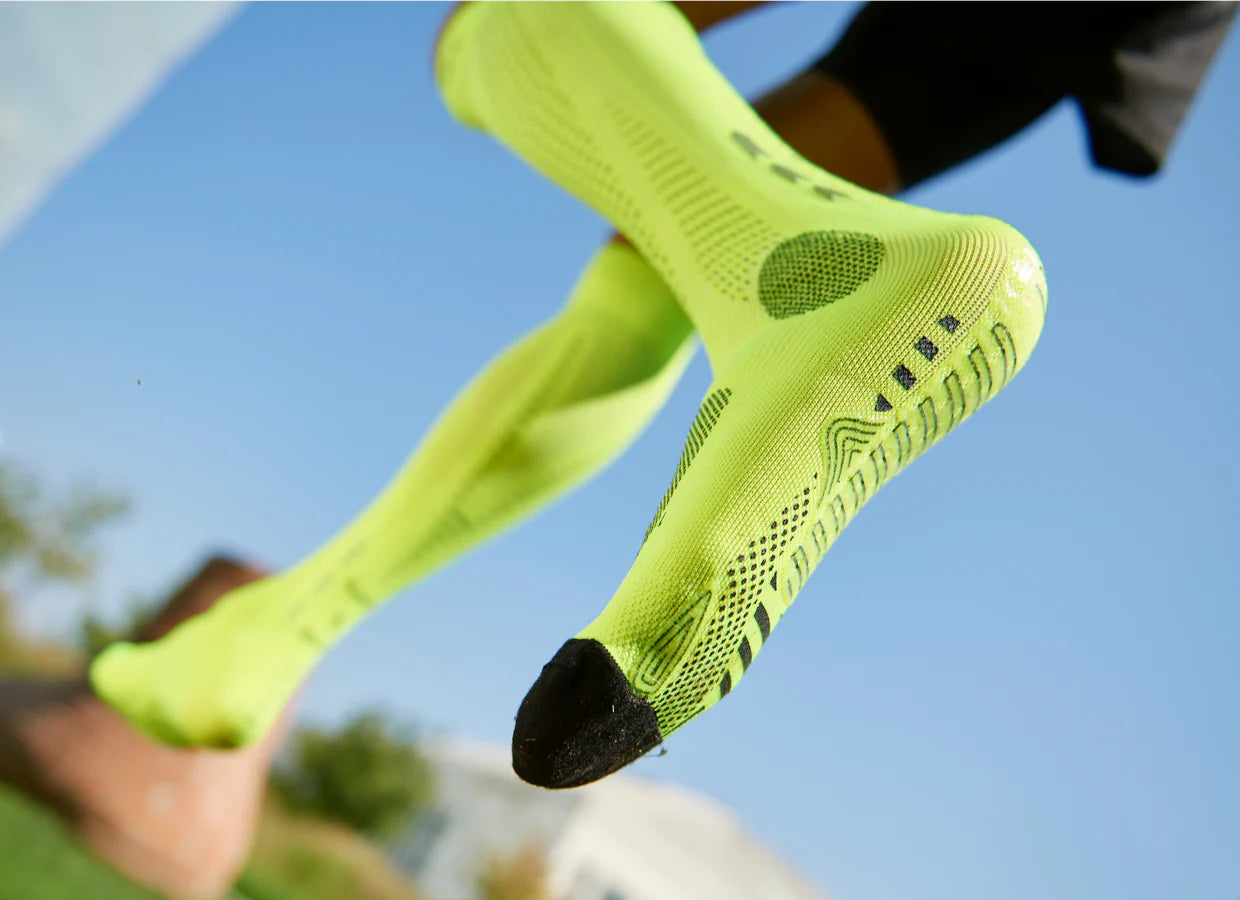
How to prevent it: A biomechanical sock with structured ankle support is the most practical in-play prevention tool. The Floky S-Mash Sock was engineered specifically for racquet sports, providing maximum ankle stability during lateral movement, supporting the subtalar joint during direction changes, and reducing the fatigue that makes late-session ankle rolls more likely.

4. Knee Pain from Repetitive Bending
The ready position in pickleball, a slight knee bend with weight forward, is held across long points and long sessions. This places sustained stress on the quadriceps tendons and patellar joint. For players over 40, or those with any prior knee history, this can develop into patellar tendinopathy or general knee pain.
Symptoms to watch for:
- Pain around or below the kneecap during and after play
- Stiffness when bending the knee after sitting
- A general aching that worsens across a session
How to prevent it: The Floky Knee Support is designed to stabilise the knee joint and its tendinous structures, reducing swelling and protecting the joint during the repetitive bending movements that pickleball demands. For players managing existing knee issues, it also supports the recovery phase between sessions.

A Note on Age and Injury Risk in Pickleball
One of pickleball's great strengths is its accessibility to older players. But biomechanics do not account for accessibility. Tendons in players over 40 have less elasticity, lower blood supply, and longer recovery windows than younger tissue.
This does not mean older players should not play. It means they should protect themselves more proactively, not reactively. Starting biomechanical support before pain develops rather than after is the single most effective strategy for long-term pickleball participation.
The Floky Pickleball Protection System
For complete on-court protection, Australian pickleball players are pairing two Floky products.
No-Strain Sleeve — Arm, elbow, wrist, and forearm protection
S-Mash Sock — Ankle, foot, and lateral movement stability
Used together, they address the two highest-risk zones for pickleball injury through biomechanics, not just bracing.
Both products are available now at floky.com.au, with free shipping on qualifying orders across Australia.

Final Thought: The Best Pickleball Injury Is the One You Never Have
Pickleball is too good a sport to lose to an injury that was preventable.
The players who stay on court the longest, who play the most sessions per week, who still love the game five years from now, are the ones who took protection seriously before a problem forced them to.
That is what Floky is built for.
Shop the No-Strain Sleeve
Shop the S-Mash Sock
Floky is a premium Italian biomechanical sportswear brand available exclusively in Australia through Floky Australia. For questions, contact info@floky.com.au.